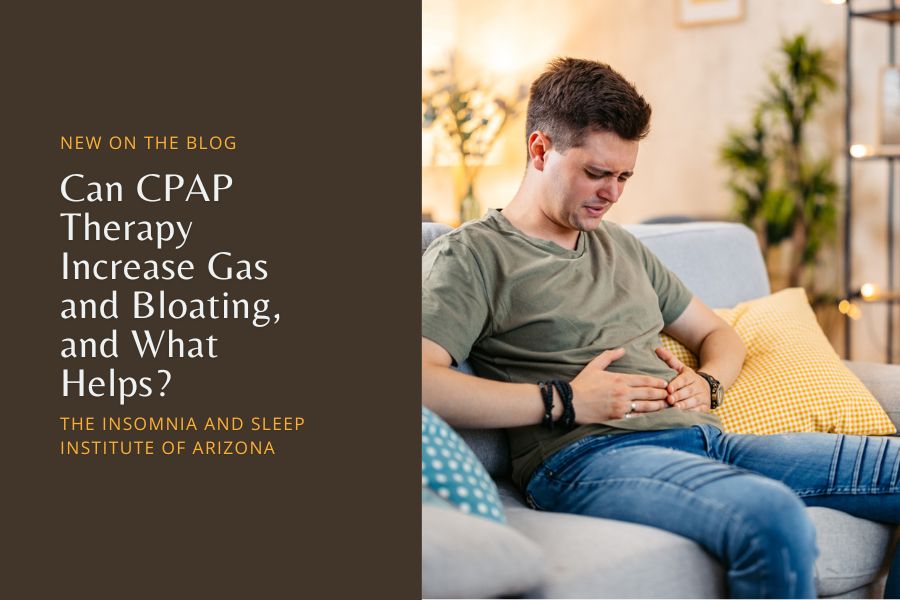
Unfortunately, it’s true that CPAP therapy can cause gas and bloating, a side effect known as aerophagia, when air meant for your lungs ends up in your stomach. For many people starting CPAP, this leads to uncomfortable mornings filled with abdominal pressure, burping, or cramping. The issue often goes undiscussed but is fairly common, and it’s one of the most cited reasons people give up on therapy too soon.
Fortunately, the causes are usually mechanical, not medical and that means they’re fixable. From adjusting your pressure settings to switching masks or modifying sleep position, small changes can make a significant difference in comfort and compliance.
Why Would CPAP Therapy Cause Gas and Bloating?
Gas and bloating from CPAP use are typically caused by aerophagia, the unintentional swallowing of air during sleep. Instead of flowing solely into the airway, some of the pressurized air enters the esophagus and gastrointestinal (GI) tract, eventually reaching the stomach and intestines. This creates a buildup of air that can lead to:
- Abdominal distension
- Burping or belching
- Flatulence
- Morning stomach cramps
- A feeling of fullness or pressure
This usually happens when one or more of the following factors are present:
- Excessive CPAP pressure: Too much pressure can overwhelm the upper esophageal sphincter, allowing air to escape into the digestive tract.
- Poor mask seal or fit: Leaks cause fluctuations in pressure that increase the chance of air entering the stomach.
- Swallowing air subconsciously: Anxiety or mouth breathing during sleep can increase the risk.
- Supine sleep position (sleeping on the back): This position can promote gastric reflux and make the esophagus more susceptible to air entry.
- Underlying conditions: People with GERD, hiatal hernia, or weak esophageal sphincters are more vulnerable.
The mechanism is simple but unsettling. CPAP is meant to stent open the airway. But if air goes where it shouldn’t, your digestive system becomes an unintended target.
Research About CPAP-Related Bloating
Research shows that aerophagia, or swallowing air, is a real and measurable side effect of CPAP therapy. One that can lead to gas, bloating, abdominal discomfort, and in rare cases, therapy abandonment.
Though often underreported, several studies have examined its prevalence, severity, and underlying causes, helping clinicians understand which patients are most affected and what might help.
A large observational study of 753 adults with obstructive sleep apnea found that 7.2% developed CPAP-related aerophagia, marked by gas, bloating, and belching that began after starting therapy.
Over half of those affected reported significant discomfort, yet less than half of them brought it up with their physicians, highlighting how often this side effect flies under the radar. The data also revealed two key risk factors:
- Higher CPAP pressures increased the likelihood of aerophagia (odds ratio 1.24)
- Having GERD doubled the risk (odds ratio 2.52)
Interestingly, older age and higher BMI appeared to reduce the risk, possibly due to decreased sensitivity in the gut or differences in pressure distribution (1).
Another study from the Journal of Clinical Sleep Medicine compared fixed-pressure CPAP to auto-adjusting CPAP (APAP) in patients with aerophagia. The trial found that switching to auto-CPAP significantly reduced symptoms.
Patients using fixed CPAP had a median pressure of 14 cm H₂O, while those using auto-CPAP had a lower median of 9.8 cm H₂O, supporting the idea that lower average pressure can reduce air swallowing. The study also noted that using nasal masks, as opposed to full face masks, resulted in fewer aerophagia complaints (2).
Smaller studies have drawn a clear link between aerophagia and GERD, pointing to dysfunction in the lower esophageal sphincter (LES) as a likely mechanism.
In a matched-control study of 44 patients, 77% of those with aerophagia also had GERD symptoms, compared to 36% of those without. Nearly half were using acid-reducing medications, reinforcing the overlap between digestive and sleep-disordered breathing issues (3).
Together, these findings suggest that aerophagia is a multi-factorial side effect, influenced by pressure levels, mask type, sleep position, and digestive health.
When left unaddressed, it can reduce therapy adherence and quality of life. Fortunately, the evidence supports several strategies to reduce the problem, including lowering pressure, switching to auto-CPAP, adjusting mask type, and addressing GERD if present.
Is the Mask Type or Fit Contributing to the Problem?
Mask fit and type may often overlooked contributors to aerophagia. When air leaks from the mask, the CPAP machine compensates by delivering more pressure, which may increase the risk of swallowing air.
Here’s how mask choice plays a role:
- Full-face masks: Cover both the nose and mouth. These can increase air delivery volume, which sometimes leads to excess air being swallowed, especially in people who tend to breathe through their mouths.
- Nasal masks or nasal pillows: Less surface area means less risk of leakage, but they’re only effective for users who do not breathe through their mouths during sleep.
- Improper sizing or loose straps: Can create small leaks that affect consistent pressure and trigger frequent arousals, increasing the chance of gas ingestion.
Patients should always be fitted by a trained sleep technician or respiratory therapist. A mask that feels comfortable but leaks slightly is not a good fit. And over-tightening the straps often makes the problem worse, not better.

Could CPAP Pressure Be Too High for You?
Incorrect or excessive pressure settings are one of the most common causes of CPAP-related aerophagia.
Signs your CPAP pressure may be too high:
- You wake up with a bloated or hard stomach
- You burp or pass gas more frequently in the morning
- You feel like you’re “fighting” the machine while exhaling
- Your mask leaks frequently despite being well-fitted
- You experience fragmented sleep despite good usage time
Solutions your sleep doctor may consider:
- Titration study: A new in-lab or home study to determine optimal settings.
- Auto-CPAP (APAP): Automatically adjusts pressure throughout the night based on your real-time breathing needs.
- BiPAP (Bilevel Positive Airway Pressure): Delivers lower pressure during exhalation, making it easier to breathe out and reducing the risk of swallowed air.
- EPR settings: Modern CPAP machines have features like EPR (Expiratory Pressure Relief) or Flex modes, which ease exhalation and reduce GI side effects.
If your pressure was manually set and hasn’t been reviewed in months or years, you may be using more pressure than you need. Over-treatment is just as problematic as under-treatment when it comes to side effects.
Can Your Sleeping Position Affect CPAP Bloating?
Your sleeping position can significantly influence how much air enters your digestive tract during CPAP therapy. The position you sleep in affects esophageal alignment, airway resistance, and even mask stability.
Key facts:
- Back sleeping (supine) increases the likelihood of air being forced down the esophagus, especially if your lower esophageal sphincter is weak.
- In people with GERD or hiatal hernia, this position may also promote reflux, compounding the discomfort.
- Left side sleeping has been shown to reduce gastroesophageal reflux and improve esophageal clearance.
- Elevating the head of the bed by 30 to 45 degrees can reduce abdominal pressure and reflux, helping minimize air trapping.
If you’re experiencing bloating with CPAP, start by adjusting your position. Use body pillows or a wedge to support side sleeping. This change alone can reduce the amount of air that enters the stomach during therapy.
Do Digestive Disorders Make the Bloating Worse?
Existing gastrointestinal conditions can worsen CPAP-related bloating. These disorders may make the stomach and esophagus more vulnerable to air entry, reduce digestive motility, or impair the body’s ability to clear swallowed air.
Conditions that increase risk include:
- Gastroesophageal Reflux Disease (GERD): Weakens the esophageal sphincter, allowing air to more easily pass into the stomach.
- Hiatal Hernia: Alters anatomy and increases the likelihood of air entry and reflux when using CPAP.
- Irritable Bowel Syndrome (IBS): Slower gut motility can lead to prolonged gas retention and heightened discomfort.
- Gastroparesis: Delayed gastric emptying means air accumulates longer, amplifying bloating and nausea.
Can Diet and Timing of Meals Affect CPAP-Related Bloating?
Absolutely. Your diet and when you eat have a direct impact on gas production and abdominal pressure during the night.
Avoid close to bedtime:
- Carbonated drinks: Introduce excess gas into the GI tract before sleep.
- Legumes and cruciferous vegetables: Naturally ferment in the gut, producing gas.
- Fried or fatty foods: Slow gastric emptying, increasing the chance of reflux and bloating.
- Large meals within 2–3 hours of bedtime: Increase intra-abdominal pressure, which can worsen aerophagia.
Recommended habits:
- Eat light dinners and allow 2–3 hours between your last meal and bedtime.
- Choose foods that are low in fermentable carbohydrates (low-FODMAP).
- Stay upright after meals. Lying down too soon increases the risk of reflux and gastric air entrapment.
- Keep a food journal to identify individual triggers.
Simple dietary adjustments can significantly reduce nighttime bloating, particularly in people sensitive to CPAP side effects.
Can Switching to BiPAP or APAP Help?
Yes, switching from standard CPAP to BiPAP (bilevel positive airway pressure) or APAP (auto-adjusting CPAP) can reduce air-related side effects for many patients. These alternatives provide more nuanced airflow that adjusts with your breathing, reducing the force that can push air into the stomach.
BiPAP advantages:
- Offers two pressures. A higher one for inhaling and a lower one for exhaling.
- Easier for patients to breathe out, which can decrease air trapping in the gut.
- Often prescribed for patients with pressure intolerance or comorbid conditions like COPD.
APAP benefits:
- Adjusts pressure in real time based on your airway resistance.
- Reduces overall average pressure over the night, leading to less strain on the esophagus.
- Ideal for patients with variable apnea patterns or who only require high pressure occasionally.
If you’re experiencing bloating and your current machine is fixed-pressure CPAP, a trial of BiPAP or APAP could make a measurable difference in comfort and compliance.
Should You See a Sleep Specialist About CPAP Bloating?
Yes, especially if the bloating is persistent, painful, or interfering with your ability to use the machine consistently.
A sleep specialist will:
- Review your pressure data and assess whether settings are appropriate.
- Examine leak data to evaluate your mask’s performance.
- Recommend mask type changes if your current interface is contributing to the issue.
- Evaluate for comorbid conditions such as GERD or sleep-positioning challenges.
- Possibly refer you for gastroenterology co-management if digestive disorders are contributing.
Never stop using CPAP without medical guidance. Instead, schedule an appointment with a provider experienced in troubleshooting therapy-related side effects.
Talk to Arizona’s Sleep Experts
The Insomnia and Sleep Institute of Arizona is led by board-certified sleep physicians who take your treatment seriously from day one. We pay attention to details that others overlook like gas, bloating, pressure intolerance, or mask fit issues that make CPAP hard to stick with.
Our locations in Scottsdale, Gilbert, and Phoenix are run by medical professionals and every decision about your care is handled by doctors who understand sleep from both a clinical and practical point of view.
Why patients rely on us:
- A certified sleep doctor is involved in your care.
- We help handle CPAP side effects with real solutions.
- You’ll never be rushed through your appointments or left to figure things out alone.
Contact us now. We’ll help you breathe better, sleep better, and feel better, without the side effects.
References
- Takero Fukutome. (2024). Prevalence of continuous positive airway pressure-related aerophagia in obstructive sleep apnea: an observational study of 753 cases undergoing CPAP/BiPAP treatment in a sleep clinic – part one of a two-part series. Sleep and Breathing. https://doi.org/10.1007/s11325-024-03152-8
- Genta, P. R., Grad, G. F., & Herculano, S. (2017). Aerophagia During CPAP for OSA: The Case for Auto-CPAP and Nasal Mask. Journal of Clinical Sleep Medicine, 13(07), 859–860. https://doi.org/10.5664/jcsm.6650
- Watson, N. F., & Mystkowski, S. K. (2008). Aerophagia and Gastroesophageal Reflux Disease in Patients using Continuous Positive Airway Pressure: A Preliminary Observation. Journal of Clinical Sleep Medicine : JCSM : Official Publication of the American Academy of Sleep Medicine, 4(5), 434. https://pmc.ncbi.nlm.nih.gov/articles/PMC2576329/
Disclaimer: The information provided in this blog post is for educational and informational purposes only and is not intended as a substitute for professional medical advice, diagnosis, or treatment. Always consult with a licensed healthcare provider for recommendations specific to your individual health needs.