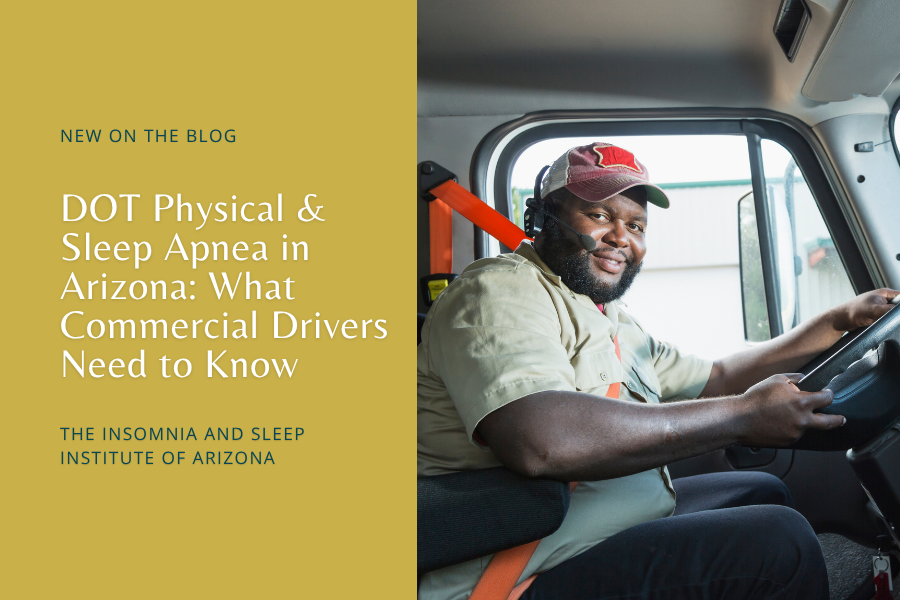
Having sleep apnea does not automatically disqualify you from holding a Commercial Driver’s License (CDL) in Arizona. DOT medical examiners do not issue immediate disqualifications simply because a driver is diagnosed with sleep apnea.
What matters is whether your condition is properly evaluated, treated, and managed. With documented compliance on therapy like Continuous Positive Airway Pressure (CPAP), commercial drivers can safely maintain their medical certification and stay on the road.
Why Sleep Apnea Matters in DOT Physicals
At The Insomnia and Sleep Institute of Arizona, our sleep physicians frequently consult with commercial drivers who worry that a sleep evaluation will end their driving career. Drowsy driving is a major public safety concern that frequently makes national headlines.
The fatal 2014 crash involving a Walmart truck and a limousine carrying comedian Tracy Morgan drew national attention to the dangers of fatigued driving. Federal investigators found that the truck driver had been awake for more than 28 hours, delaying his response to traffic slowing in a work zone. The crash killed comedian James McNair and seriously injured Morgan and several other passengers. Untreated sleep apnea can cause the same kind of fatigue, and it is much less visible.
Obstructive sleep apnea causes repeated breathing pauses during sleep, which significantly reduces oxygen levels and fragments rest. Drivers with obstructive sleep apnea are about 2.4 times as likely to have a car crash as those without it (1). Bob Stanton, who drove over-the-road trucks for 20 years, put it bluntly: “If I hadn’t gotten treated back in 2002, I’d be dead by now.” He knows from experience that sleep apnea was a greater threat to his life than bad weather or dangerous drivers (2).
Federal Motor Carrier Safety Administration (FMCSA) standards require examiners to evaluate whether any medical condition could interfere with safe vehicle operation (3). DOT guidance notes that the purpose of the physical exam is to detect organic conditions that impact safe driving (4), requiring the medical examiner to determine a driver’s fitness for duty (3). In our clinical practice, we evaluate sleep apnea not as an automatic career-ender, but as a manageable health condition.
Is Sleep Apnea Automatically Disqualifying for CDL Drivers?
Sleep apnea is not automatically disqualifying for CDL drivers. FMCSA guidance confirms that drivers with sleep apnea can be medically certified if treatment successfully controls their symptoms and maintains alertness during duty hours (3). Arizona applies the same federal physical qualification rules to all CDL holders, including drivers who stay within the state (15). A CDL holder must also notify the Arizona Department of Transportation within 10 days if a physical condition develops or worsens enough that they no longer meet those standards (16).
In our experience caring for drivers across Arizona, we find that fear of losing a license often causes drivers to delay testing. However, ignoring symptoms or refusing evaluation is what actually jeopardizes your certification. Participating in proper diagnosis and treatment protects both your health and your livelihood.
What DOT Medical Examiners Look for During a Physical
DOT medical examiners do not perform full sleep studies during a physical, but they do screen for key risk factors. FMCSA standards do not mandate specific screening guidelines, leaving examiners to use clinical judgment to identify at-risk drivers (5).
Common risk factors include loud snoring, witnessed apneas, daytime sleepiness, elevated Body Mass Index (BMI), large neck size, and hypertension (5, 6).
Dr. Anne-Marie Puricelli, MD, JD, national medical director of transportation at Concentra, explains the examiner’s perspective: “While federal regulations do not require CMV drivers to complete and pass a sleep apnea exam for DOT certification, FMCSA guidelines require medical examiners to apply a pulmonary standard, which ultimately enables examiners to determine if a respiratory condition like sleep apnea could interfere in a driver’s ability to operate a commercial motor vehicle safely” (7).
In-Lab Sleep Study vs. Home Sleep Apnea Test for Drivers
When a DOT physical indicates potential sleep apnea risk, physicians determine whether an in-lab polysomnography (PSG) or a Home Sleep Apnea Test (HSAT) is appropriate. The American Academy of Sleep Medicine states that home testing is suitable for uncomplicated adult patients at risk of moderate to severe OSA (8). However, for drivers with underlying heart or lung disease, prior stroke, severe insomnia, or inconclusive home results, our sleep specialists recommend an in-lab sleep study to ensure accurate diagnostic results (9).
What Happens If You Are Diagnosed With Sleep Apnea
A diagnosis of sleep apnea simply means it is time to start effective treatment. FMCSA guidance notes that drivers who successfully treat their sleep apnea regain their medically-qualified-to-drive status once fitness and therapy compliance are demonstrated (3).
Examiners may grant conditional certification while a driver begins treatment (10). Treating sleep apnea improves sleep quality, lowers blood pressure, and reduces cardiovascular risk (11). Dr. Puricelli regularly witnesses this transformation: “Most of them come back to us and thank us for treating them.” Truckers who start CPAP often report quick results (12).
CPAP Therapy and DOT Compliance Requirements
For moderate to severe sleep apnea, Continuous Positive Airway Pressure (CPAP) is the gold standard. To maintain certification, compliance must be documented objectively (13). An FMCSA expert panel defined acceptable compliance as using the device for at least four hours per night on at least 70 percent of nights (13).
A study of one large trucking firm found that compliant drivers had crash rates statistically similar to non-apnea drivers, whereas non-compliant drivers had about five times the rate of serious preventable crashes (14). At our clinic, we work closely with drivers to adjust mask fit and pressure settings so therapy is comfortable and consistent.
How Long Does Certification Last After a Sleep Apnea Diagnosis?
Certification duration depends on documented therapy adherence. A 2008 FMCSA expert panel recommended that a newly diagnosed driver receive a conditional one-month certification while starting CPAP therapy (13). Once compliance is demonstrated, certification can extend to three months, and eventually to a full one-year medical card upon continued objective verification (13). While maximum certification for healthy drivers can reach 24 months, drivers managing sleep apnea typically renew annually with updated usage logs (13).
The Risks of Drowsy Driving and Untreated Sleep Apnea
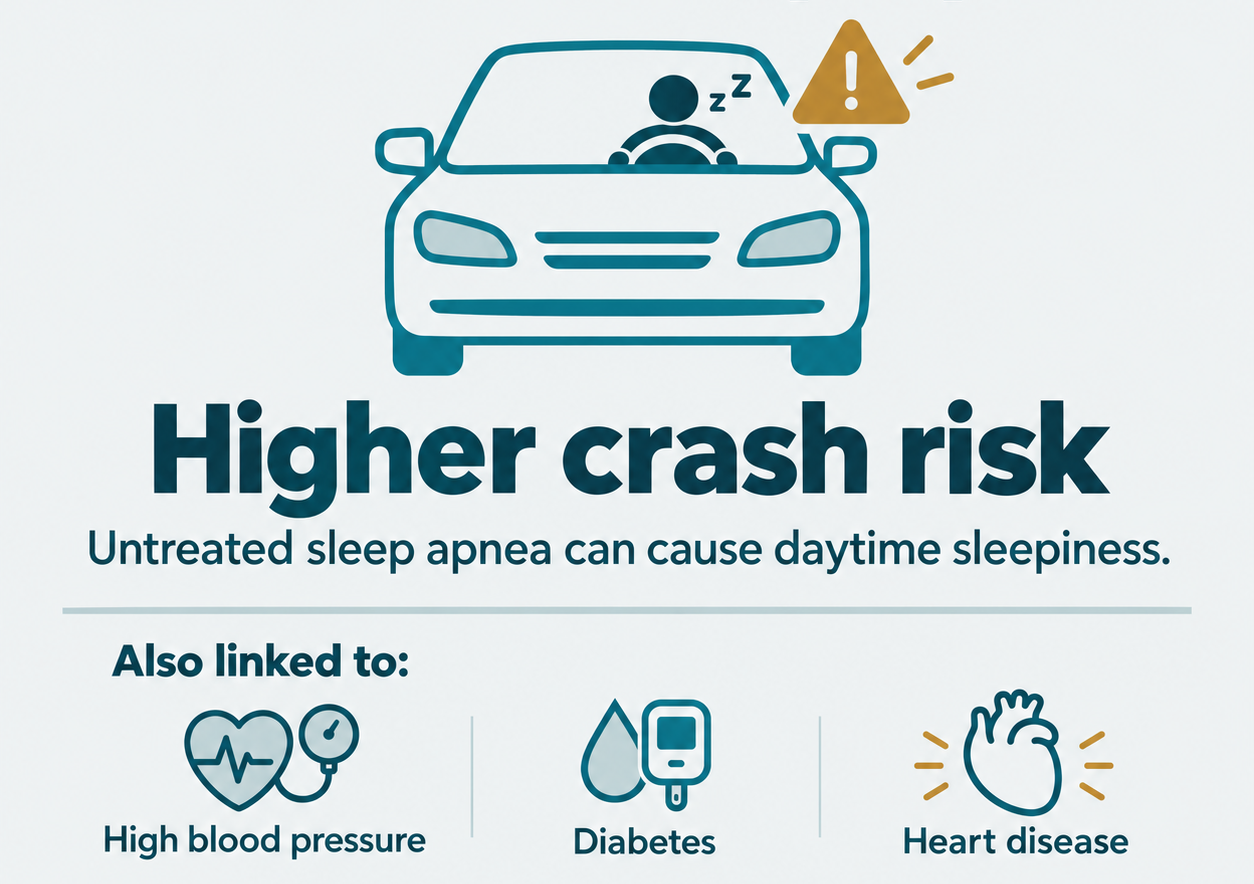
Leaving sleep apnea untreated carries severe personal and professional consequences. Untreated sleep apnea increases fatigue-related crash risks by two times (1). The FMCSA explicitly warns that untreated sleep apnea heightens motor vehicle crash risks (3). Beyond driving hazards, untreated OSA is linked to a higher risk of hypertension, diabetes, and heart disease (11).
What Commercial Drivers Should Do Before Their DOT Physical
Preparation simplifies the certification process. We advise commercial drivers to monitor their sleep health and address symptoms early. If you already use a CPAP machine, bring your objective compliance report from the past 30 to 90 days to your appointment. Taking these proactive steps avoids last-minute certification delays.
Sleep Apnea Support at The Insomnia and Sleep Institute of Arizona
At The Insomnia and Sleep Institute of Arizona, we diagnose and treat sleep apnea and a full range of sleep disorders in adults and children. Our team focuses exclusively on sleep medicine, which allows us to provide thorough evaluations, accurate testing, and personalized treatment plans tailored to each patient’s needs.
We offer comprehensive sleep testing and individualized CPAP support, along with guidance to address comfort concerns, adherence challenges, and long-term treatment success. Our goal is to ensure that every patient receives the right diagnosis and the right therapy from the start.
If you have been diagnosed with sleep apnea, suspect you may have a sleep disorder, or are experiencing ongoing sleep concerns, contact us to schedule a consultation at one of our three locations in Gilbert, Phoenix, or Scottsdale. We are here to help you sleep better, feel better, and protect your long-term health.
References
- Tregear, S., Reston, J., Schoelles, K., & Phillips, B. (2009). Obstructive Sleep Apnea and Risk of Motor Vehicle Crash: Systematic Review and Meta-Analysis. Journal of Clinical Sleep Medicine, 5(6), 573–581. https://doi.org/10.5664/jcsm.27662
- Stinson, J. (2021, February 25). Sleep apnea: A slow killer lurks among OTR truck drivers. Trucking Dive. https://www.truckingdive.com/news/OTR-truck-drivers-sleep-apnea-schneider-safety/594568/
- Driving When You Have Sleep Apnea | FMCSA. (2026). Dot.gov. https://www.fmcsa.dot.gov/driver-safety/sleep-apnea/driving-when-you-have-sleep-apnea
- Federal Motor Carrier Safety Administration (FMCSA) Medical Examiner Handbook. (n.d.). https://www.fmcsa.dot.gov/sites/fmcsa.dot.gov/files/docs/mission/advisory-committees/mrb/83401/fmcsamedicalexaminerhandbook_0.pdf
- Where can I find the 2015 OSA Bulletin? | FMCSA. (2024). Dot.gov. https://www.fmcsa.dot.gov/regulations/medical/where-can-i-find-2015-osa-bulletin
- NATIONAL REGISTRY OF CERTIFIED MEDICAL EXAMINERS Medical Examiner’s Handbook 2024 Edition ii. (2024). https://www.fmcsa.dot.gov/sites/fmcsa.dot.gov/files/2024-01/Medical%20Examiner%27s%20Handbook%202024%20Edition_0.pdf
- Why Some Truck Drivers Are Asked to Take a Sleep Apnea Test. (2025, May 8). OEM | Explore. https://careers.acoem.org/blog/oem-explore-resources-2/why-some-truck-drivers-are-asked-to-take-a-sleep-apnea-test-121
- Celmer, L. (2017, October 13). AASM Home Sleep Apnea Testing (HSAT) Position Statement. American Academy of Sleep Medicine – Association for Sleep Clinicians and Researchers. https://aasm.org/aasm-releases-position-statement-home-sleep-apnea-testing/
- Kapur, V. K., Auckley, D. H., Chowdhuri, S., Kuhlmann, D. C., Mehra, R., Ramar, K., & Harrod, C. G. (2017). Clinical Practice Guideline for Diagnostic Testing for Adult Obstructive Sleep Apnea: An American Academy of Sleep Medicine Clinical Practice Guideline. Journal of Clinical Sleep Medicine, 13(3), 479–504. https://doi.org/10.5664/jcsm.6506
- Why do I have to take a sleep apnea test? (2022). Concentra. https://www.concentra.com/resource-center/articles/why-some-truck-drivers-are-asked-to-take-a-sleep-apnea-test/
- KALES, S. N., & STRAUBEL, M. G. (2014). Obstructive Sleep Apnea in North American Commercial Drivers. Industrial Health, 52(1), 13–24. https://doi.org/10.2486/indhealth.2013-0206
- Overdrive Staff. (2012, February 1). The apnea hurdle. Overdrive. https://www.overdriveonline.com/business/article/14876917/the-apnea-hurdle
- Ancoli-Israel, S., Czeisler, C., Fp George, C., Guilleminault, C., Pack, A., & Chb. (n.d.). Expert Panel Recommendations: Obstructive Sleep Apnea and Commercial Motor Vehicle Driver Safety Medical Expert Panel Members. Retrieved February 9, 2026, from https://www.fmcsa.dot.gov/sites/fmcsa.dot.gov/files/docs/Expert_Pan_Rec_Sleep_Apnea_12508.pdf
- Burks, S. V., Anderson, J. E., Bombyk, M., Haider, R., Ganzhorn, D., Jiao, X., Lewis, C., Lexvold, A., Liu, H., Ning, J., Toll, A., Hickman, J. S., Mabry, E., Berger, M., Malhotra, A., Czeisler, C. A., & Kales, S. N. (2016). Nonadherence with Employer-Mandated Sleep Apnea Treatment and Increased Risk of Serious Truck Crashes. Sleep, 39(5), 967–975. https://doi.org/10.5665/sleep.5734
- Ariz. Admin. Code R17-5-202. Motor Carrier Safety: Incorporation of Federal Regulations; Applicability. https://www.law.cornell.edu/regulations/arizona/Ariz-Admin-Code-SS-R17-5-202
- Ariz. Admin. Code R17-4-508. Commercial Driver License Physical Qualifications. https://www.law.cornell.edu/regulations/arizona/Ariz-Admin-Code-SS-R17-4-508
Disclaimer: The information provided in this blog post is for educational and informational purposes only and is not intended as a substitute for professional medical advice, diagnosis, or treatment. Always consult with a licensed healthcare provider for recommendations specific to your individual health needs.