Daytime sleepiness is a major road safety hazard because fatigue impairs cognitive processing and reaction time as severely as alcohol intoxication.
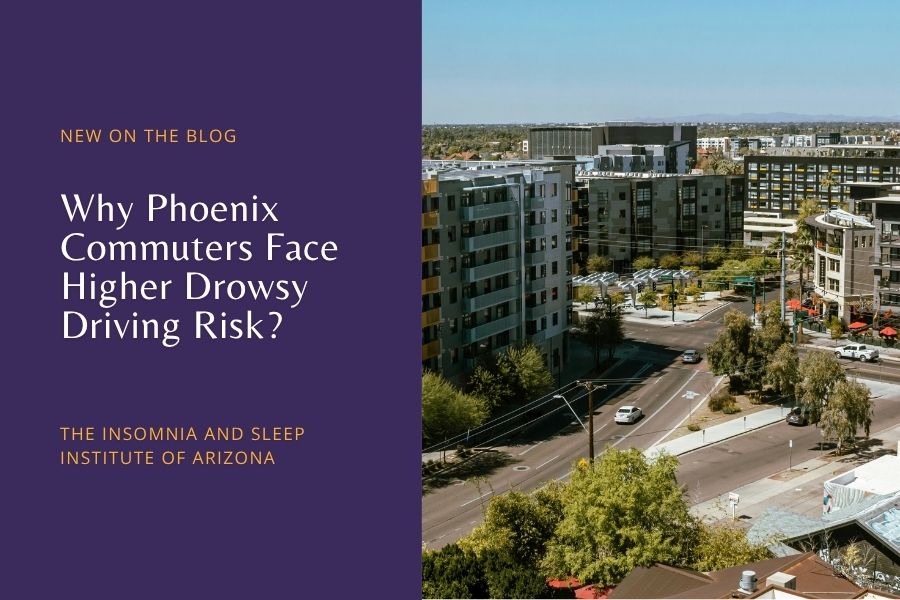
In the Phoenix metropolitan area, long commutes on freeways like Loop 101 and Interstate 10, combined with extreme desert heat, compound this risk and turn standard daily drives into hazardous situations. Drowsy driving contributes to an estimated 91,000 police reported crashes, nearly 50,000 injuries, and close to 800 deaths annually (1). The actual toll is likely higher because fatigue leaves no physical evidence at the scene of a crash (1).
Poor sleep may slows reaction times, weakens attention, impairs short term memory, and degrades judgment (2). Sleep medicine pioneer William C. Dement captured the urgency of this issue with a direct warning: “Drowsiness is red alert” (3).
Why Drivers Underestimate the Dangers of Drowsy Driving
Many motorists believe they can accurately gauge when they are too tired to drive, but medical research demonstrates that self assessment is unreliable. In federal surveys, thousands of drivers admitted to falling asleep behind the wheel within the past month alone (4). Unlike alcohol intoxication or speeding, driver fatigue cannot be measured at a roadside checkpoint (1).
The dangers of drowsy driving gained national attention in 2014 when actor and comedian Tracy Morgan was critically injured in a highway collision in which driver fatigue was later determined to be the probable cause. CNN’s reporting on the National Transportation Safety Board investigation noted that the Walmart truck driver “had been awake for more than 28 hours” before the crash. In cinema, films like The Machinist depict the extreme psychological effects of prolonged insomnia, including hallucinations and a distorted perception of reality. On the highway, severe sleepiness can also lead to microsleeps, which the CDC describes as brief episodes of sleep lasting “from a fraction of a second up to 30 seconds.”
Why Do Phoenix Conditions Create Unique Driving Risks?
Commuters in the Valley face a convergence of environmental and logistical factors that accelerate physical fatigue. The average commute for Phoenix workers reaches about 25.6 minutes, and many residents spend even longer traveling across the Valley between cities and communitiesbs (5). Extended driving requires prolonged visual focus and static posture, which naturally promotes mental fatigue.
The Arizona climate adds another layer of physiological stress. Phoenix regularly experiences extended summer heat waves with temperatures exceeding 100°F and 110°F (6). Extreme heat exposure places heavy demands on the cardiovascular system, contributing to dehydration, dizziness, physical exhaustion, nausea, and headaches (7). When intense afternoon sun exposure and elevated cabin temperatures combine with daily traffic congestion, driver alertness drops significantly faster than in moderate climates.
How Does Shift Work and Sleep Loss Impair the Brain?
A large portion of the Valley workforce operates outside standard daytime hours. Healthcare workers at major hospital networks, first responders, airport personnel, logistics teams, and hospitality staff routinely drive home after long night shifts. The human body operates on an internal circadian rhythm that regulates alertness and sleep cycles (8)(9). When work routines repeatedly disrupt these biological rhythms, the brain experiences persistent deficits in concentration, slower information processing, and reduced situational awareness (8)(9).
Prolonged wakefulness directly alters neurological function. Remaining awake for 24 continuous hours produces cognitive and motor impairment comparable to a blood alcohol concentration of 0.10%, which exceeds the legal limit for driving in all fifty states (10). A worker who wakes up early, completes a demanding shift, manages family errands, and drives home late at night faces substantial cognitive impairment even without consuming any alcohol.
What Warning Signs Should Drivers Recognize?
Driver fatigue rarely occurs without preliminary physical warnings, yet motorists often overlook these signals. Common warning signs include frequent yawning, heavy blinking, difficulty remembering the last few miles driven, missing highway exits, drifting between lanes, and running over roadside rumble strips (4).
Many drivers attempt to fight off sleepiness by rolling down windows, turning on cold air conditioning, or increasing the radio volume. While these adjustments may provide a momentary sensory jolt, clinical evidence shows they do not restore cognitive alertness or motor reflexes (4). When these warning signs appear, the only effective remedy is to pull over in a secure location, rest, or switch drivers (4).
Could an Underlying Sleep Disorder Be the Cause?
When daytime sleepiness occurs regularly despite spending seven to eight hours in bed, an undiagnosed medical condition is often the root cause. Obstructive sleep apnea causes repeated airway collapses throughout the night, leading to oxygen drops, fragmented sleep, morning headaches, and severe daytime exhaustion (11). Chronic insomnia prevents patients from initiating or maintaining restorative sleep (12), while neurological disorders such as narcolepsy cause sudden, uncontrollable daytime sleep attacks (13). Additionally, shift work sleep disorder leaves nighttime employees in a state of chronic sleep debt due to misaligned circadian biology (14).
Research indicates that sleeping fewer than five hours per night multiplies crash risk to levels comparable to driving intoxicated (15). As transportation safety researcher Dr. David Yang summarized, a driver cannot miss sleep and expect to function safely behind the wheel (15).
How Can Drivers Improve Road Safety and Alertness?
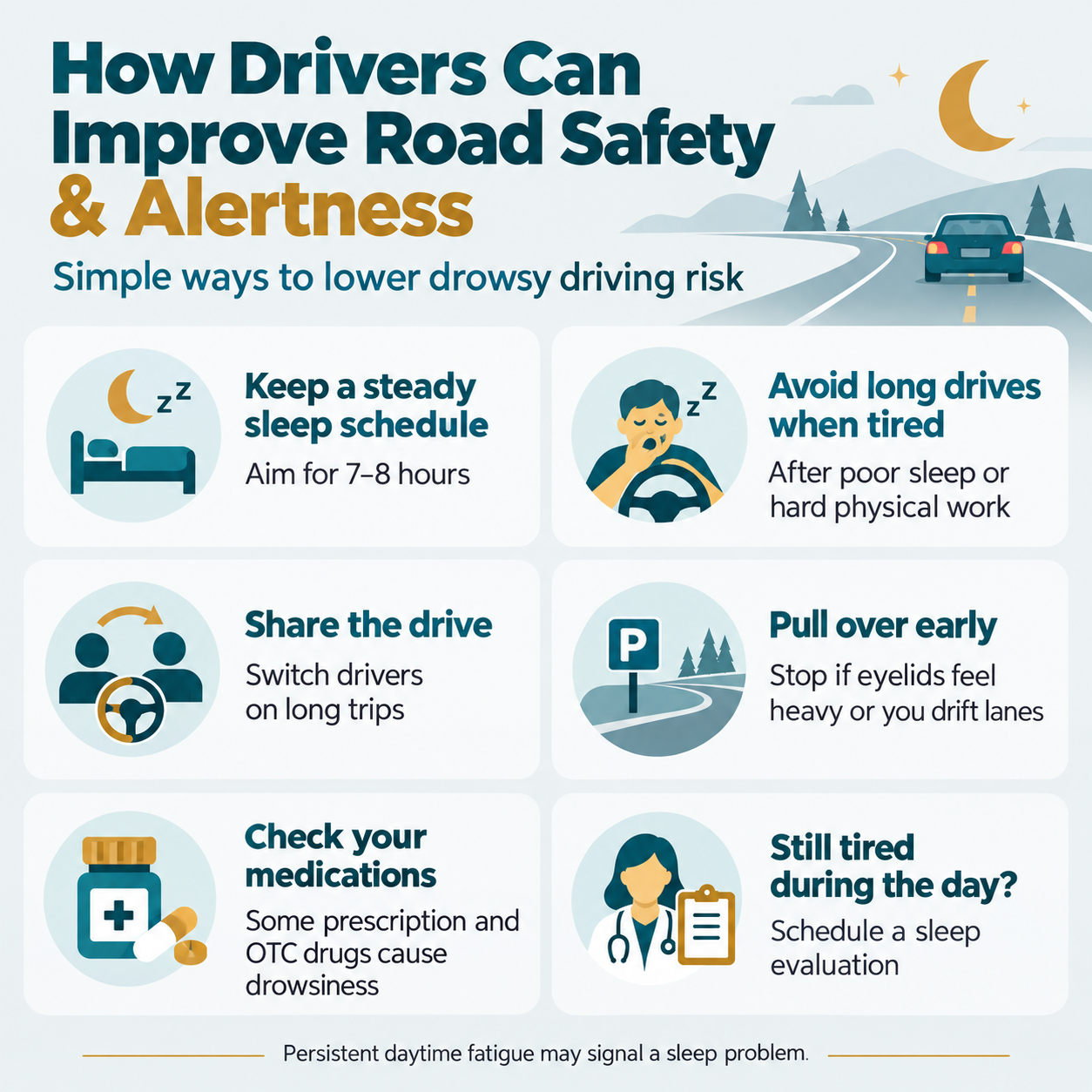
Valley drivers can implement several clinical and lifestyle strategies to reduce fatigue related driving risks:
- Maintain a consistent sleep schedule that secures at least seven to eight hours of uninterrupted rest daily.
- Avoid embarking on long highway trips immediately following strenuous physical work or nights of poor sleep.
- Trade driving duties with a passenger during extended commutes or long road trips.
- Stop at a designated rest area or safe parking lot as soon as eyelid heaviness or lane drifting begins.
- Consult a healthcare provider to review prescription or over the counter medications that list drowsiness as a side effect.
- Schedule a professional sleep consultation if daytime fatigue continues to interfere with alertness.
When Should You Seek a Comprehensive Sleep Evaluation?
Persistent daytime drowsiness is not an inevitable consequence of aging, demanding work schedules, or busy lifestyles. Relying on caffeinated drinks to stay awake behind the wheel masks the underlying issue without restoring neural recovery.
At The Insomnia and Sleep Institute of Arizona, our clinical team provides diagnostic evaluations and personalized treatment plans for conditions such as sleep apnea, insomnia, narcolepsy, and circadian rhythm disorders. Led by triple board certified sleep specialist Dr. Ruchir P. Patel, we focus on identifying the medical root causes of chronic fatigue. We serve communities across Scottsdale, Gilbert, and Phoenix.
If driving feels unsafe, if staying awake during the day is an ongoing battle, or if sleep leaves you unrefreshed, our medical team can help you find lasting relief. Contact us today to schedule your consultation.
References
- NHTSA. (2024). Nhtsa. https://www.nhtsa.gov/risky-driving/drowsy-driving
- Institute of Medicine (US) Committee on Metabolic Monitoring for Military Field Applications. (n.d.). Strategies for Monitoring Cognitive Performance. Ncbibooks; National Academies Press (US). https://www.ncbi.nlm.nih.gov/books/NBK215704/
- Spector, R. (2020, June 18). William Dement, giant in sleep medicine, dies at 91. News Center. https://med.stanford.edu/news/all-news/2020/06/william-dement-giant-in-field-of-sleep-medicine-dies-at-91.html
- Drowsy Driving — 19 States and the District of Columbia, 2009–2010. (2020). Cdc.Gov. https://www.cdc.gov/mmwr/preview/mmwrhtml/mm6151a1.htm
- QuickFacts: Phoenix city, Arizona. (2025). Census Bureau QuickFacts; United States Census Bureau. https://www.census.gov/quickfacts/fact/table/phoenixcityarizona/LFE305224
- US. (2020). NWS Phoenix Heat Page. Weather.Gov. https://www.weather.gov/psr/heat
- https://directorsblog.health.azdhs.gov/to-stay-safe-amid-extreme-temperatures-know-the-signs-of-heat-related-illness/
- Shiftwork, Long Work Hours, Fatigue. (2023, May 22). Cdc.Gov. https://www.cdc.gov/niosh/learning/safetyculturehc/module-2/9.html
- Module 2. How Shift Work and Long Work Hours Increase Health and Safety Risks | NIOSH | CDC. (2025, May). Cdc.Gov. https://www.cdc.gov/niosh/work-hour-training-for-nurses/longhours/mod2/01.html
- Module 3. Impairments due to sleep deprivation are similar to impairments due to alcohol intoxication! | NIOSH | CDC. (2025, May). Cdc.Gov. https://www.cdc.gov/niosh/work-hour-training-for-nurses/longhours/mod3/08.html
- Symptoms. (2025, January 9). Nhlbi, NIH. https://www.nhlbi.nih.gov/health/sleep-apnea/symptoms
- What Is Insomnia? (2022, March 24). Nhlbi, NIH. https://www.nhlbi.nih.gov/health/insomnia
- Narcolepsy. (2025, March 5). Nhlbi, NIH. https://www.nhlbi.nih.gov/health/narcolepsy
- Wilbanks, J. (2021, May 6). Shift Work – Sleep Education. Sleep Education. https://sleepeducation.org/sleep-disorders/shift-work/
- Samuelson, K. (2016, December 6). Driving on Less Than Five Hour’s Sleep Is Like Driving Drunk, Report Says. TIME; Time. https://time.com/4591912/driving-tired-like-driving-drunk/
Disclaimer: The information provided in this blog post is for educational and informational purposes only and is not intended as a substitute for professional medical advice, diagnosis, or treatment. Always consult with a licensed healthcare provider for recommendations specific to your individual health needs.