Waking up with a sore throat is often caused by dry air, mouth breathing, snoring, or poor-quality sleep. These factors dry out or irritate the tissues in your throat while you sleep, leaving you uncomfortable the moment you open your eyes.
Even if the soreness fades quickly, frequent morning throat pain can point to deeper issues like sleep apnea, acid reflux, or chronic allergies. Many people treat it like a minor nuisance without realizing it’s their body’s way of signaling that something is off. Finding the root cause can improve both your sleep quality and overall health. You shouldn’t have to start each day with pain or discomfort.
Could It Be Dry Air in Your Bedroom?
Dry indoor air is one of the most common and overlooked causes of waking up with a sore throat. When humidity levels fall below 30%, your throat, mouth, and nasal passages lose moisture during the night (1). This may cause a dry, scratchy, or raw feeling in the morning.
According to the Environmental Protection Agency (EPA), the ideal indoor humidity level for health and comfort is between 30% and 50% (2). Below this range, the mucous membranes in your upper airway become irritated and more vulnerable to inflammation.
This problem gets worse in winter or in homes using central heating or air conditioning (HVAC). HVAC systems tend to dry the air even further, leading to overnight dehydration of the throat lining.
Signs your bedroom air might be too dry:
- You wake up with dry lips or a parched mouth
- Your nose feels blocked or crusty
- You’re using heat or AC for long hours
- There’s static electricity in your sheets or hair
Try using a cool mist humidifier and keeping the humidity above 30%. Clean your device regularly, as a dirty humidifier can grow mold or bacteria that cause new throat irritation.
Is Mouth Breathing or Snoring the Problem?
Sleeping with your mouth open dries out your throat and disrupts normal breathing. The nose naturally warms and filters air, while mouth breathing skips this process, allowing cool, dry air to irritate tissues.
Mouth breathing during sleep can result from:
- Nasal congestion due to allergies or a deviated septum
- Enlarged tonsils or adenoids
- Chronic sinus infections
- Jaw misalignment or weak lip seal
Snoring can also make things worse. It causes tissue vibrations in the throat that create microtrauma. Over time, this leads to soreness, swelling, and inflammation of the soft palate, uvula, and pharynx.
According to the American Academy of Sleep Medicine, habitual snoring affects nearly 40% of adult men and 24% of adult women (3). It’s often a sign of obstructed airflow, or obstructive sleep apnea (OSA).
If you or your partner notice open-mouth breathing or loud snoring, it’s worth getting evaluated.
What If You Have Acid Reflux While You Sleep?
Nighttime acid reflux is another leading cause of unexplained morning sore throats. When stomach acid travels up the esophagus and reaches the throat during sleep, it irritates the delicate lining of the pharynx. This is called laryngopharyngeal reflux (LPR) or silent reflux, and it often happens without classic symptoms like heartburn.
According to a recent Cedars-Sinai study, roughly one in three U.S. adults may deal with acid reflux on a weekly basis, and some may experience worsening symptoms at night (4). Lying flat allows acid to reach higher into the airway, where it can inflame the vocal cords, throat, and even the nasal passages.
Signs your sore throat might be from reflux:
- Bitter taste in your mouth in the morning
- Coughing or throat clearing when you wake
- Hoarseness or voice changes
- Tightness or globus sensation in your throat
Elevating your head slightly, avoiding late-night meals, and limiting acidic foods might help reduce nighttime reflux (5).
Sleep Apnea or UARS?
Both OSA and upper airway resistance syndrome (UARS) can cause morning sore throats. These conditions involve repeated airway narrowing or blockage during sleep, forcing you to breathe harder and often through your mouth.
OSA affects over 25 million adults in the United States, according to the American Sleep Apnea Association (6). Repeated airway collapse disrupts airflow and leads to gasping, snoring, and fragmented sleep. UARS is milder but still involves restricted airflow and frequent micro-arousals that dry and irritate the throat.
Clues you might have sleep apnea or UARS:
- You feel unrefreshed even after 7–8 hours of sleep
- You wake with a dry mouth or headaches
- Your partner notices snoring or gasping
- You feel sleepy during the day or have trouble focusing
A home sleep study or in-lab polysomnography is the most reliable way to diagnose these conditions. If you’re already using CPAP therapy and still have morning throat pain, it could be due to dry pressurized air or poor mask fit. Using a heated humidifier attachment with your CPAP often helps.
Are Allergies or Postnasal Drip Affecting Your Sleep?
The Asthma and Allergy Foundation of America reports that allergic rhinitis impacts about 30% of adults and as many as 40% of children in the United States (7). When allergens like dust mites, pet dander, mold, or pollen trigger inflammation in the nasal passages, mucus production ramps up. That mucus often drips down the back of your throat during the night, irritating it and causing soreness upon waking.
Postnasal drip is often worse when lying flat. Mucus pools in the throat, forcing frequent swallowing, coughing, or clearing of the throat. Over time, this repeated irritation causes low-grade inflammation in the tissues.
Signs that allergies or postnasal drip are to blame:
- Throat feels raw or coated in the morning
- You wake up coughing or with a hoarse voice
- You feel pressure around your sinuses
- You use tissues frequently but have clear mucus
Simple changes can help:
- Use a HEPA air purifier in the bedroom
- Keep windows closed during high pollen seasons
- Wash bedding weekly in hot water
- Consider saline nasal sprays before bed
If these don’t help, an allergy or sleep specialist can test for triggers and rule out related conditions like sleep apnea or sinusitis.
Do You Have a Viral or Chronic Condition?
Sometimes, a sore throat simply comes from a viral infection such as the common cold, flu, or COVID-19 (8). These are typically short-lived and come with other symptoms like fever or fatigue.
But if soreness keeps returning or lasts more than two weeks, it may point to a chronic issue like sinusitis, tonsillitis, or GERD-related inflammation. Recurrent mucus drainage or mouth breathing during sleep can keep the throat irritated.
Other chronic causes include:
- Chronic rhinitis (allergic or non-allergic)
- Silent reflux (LPR)
- Exposure to smoke or pollutants
If you’ve ruled out dry air and allergies but the soreness persists, ask your doctor about chronic inflammation or sleep-related causes.
When to See a Doctor?
Morning sore throats are usually minor, but frequent or severe cases can signal deeper problems.
See your healthcare provider if:
- The sore throat persists beyond 10–14 days
- You have difficulty swallowing, swollen glands, or ear pain
- You snore, gasp, or feel unusually tired
- You’re hoarse without another clear cause
- The sore throat only occurs first thing in the morning, not throughout the day
Early evaluation can catch sleep apnea, reflux, or airway inflammation before they worsen.
How Can You Prevent Morning Sore Throats Naturally?
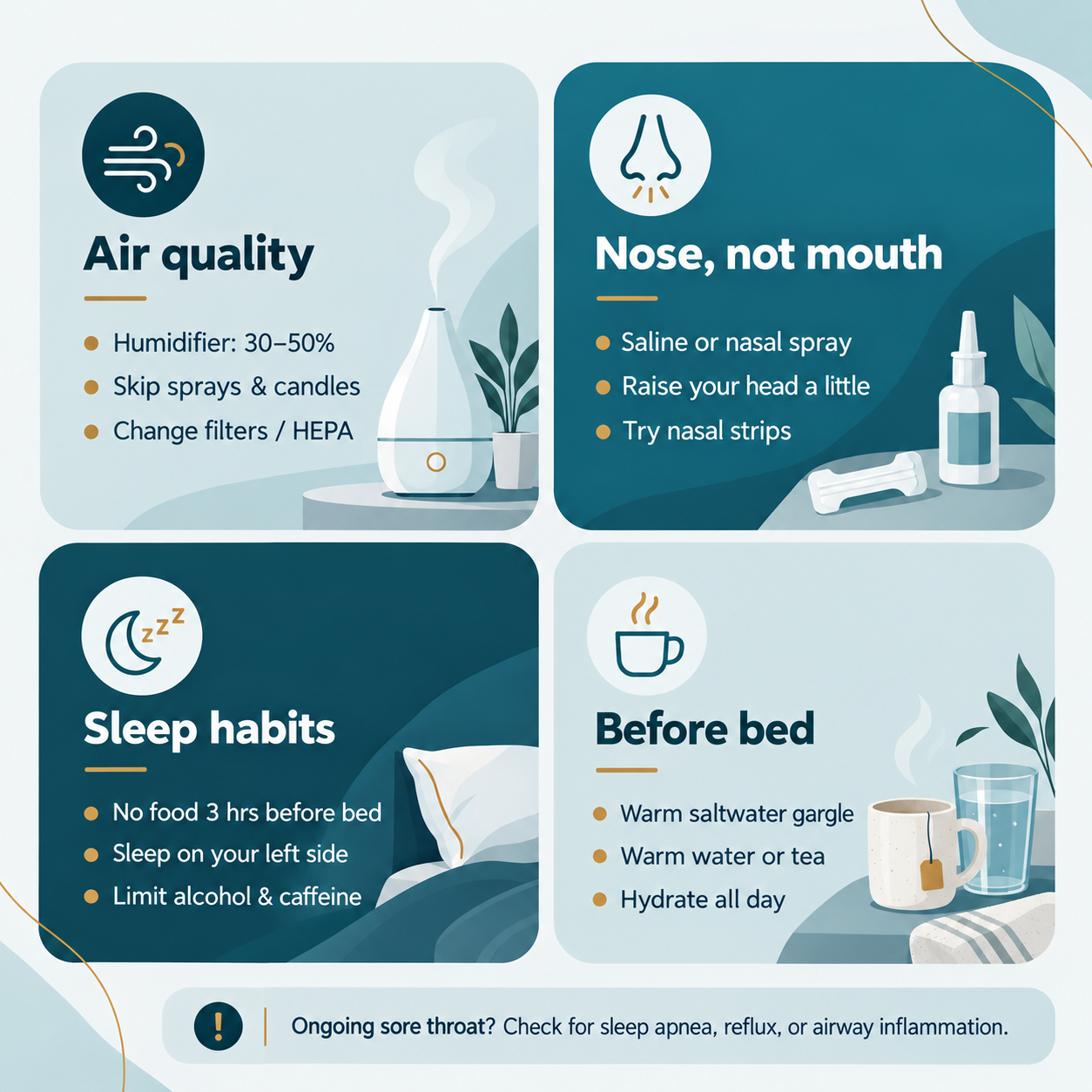
Small daily changes can make a major difference in your sleep environment and throat health.
Improve the air quality:
- Use a cool mist humidifier to maintain humidity between 30 – 50%
- Avoid scented sprays or candles, which can irritate airways
- Replace air filters monthly and use a HEPA purifier if needed
Breathe through your nose, not your mouth:
- Clear nasal congestion with saline rinses or nasal steroid sprays
- Elevate your head slightly to reduce mouth breathing and reflux
- Try nasal strips to improve airflow if you snore lightly
Adjust your sleep habits:
- Avoid eating 3 hours before bed to reduce acid reflux
- Sleep on your left side, which reduces reflux episodes
- Limit alcohol and caffeine, which dry out tissues and worsen snoring
Rinse your mouth and throat before bed:
- Gargling with warm saltwater to help reduce inflammation
- Drinking a small glass of warm water clears mucus buildup
- Herbal teas like chamomile or licorice root may soothe tissues
- Stay hydrated throughout the day
Early evaluation can catch sleep apnea, reflux, or airway inflammation before they worsen.
We Treat the Sleep Issues Behind Morning Sore Throats
When dryness, irritation, or discomfort keep returning, the cause often starts during sleep.
At the Insomnia and Sleep Institute of Arizona, our board-certified sleep physicians diagnose and treat the conditions that lead to poor airflow, mouth breathing, and restless nights — including sleep apnea and related breathing disorders.
We serve patients across Scottsdale, Phoenix, and Gilbert, offering home sleep studies and in-lab evaluations to find the true cause of your morning symptoms.
Reach out today to start sleeping deeper, breathing better, and waking up without discomfort.
References
- Measure Humidity Level to Avoid Dry Skin, Respiratory Irritations and Excess Moisture Problems. (2024, October 10). NDSU Agriculture. https://www.ndsu.edu/agriculture/extension/measure-humidity-level-avoid-dry-skin-respiratory-irritations-and-excess-moisture
- Care for Your Air: A Guide to Indoor Air Quality | US EPA. (2014, August 28). US EPA. https://www.epa.gov/indoor-air-quality-iaq/care-your-air-guide-indoor-air-quality
- Kingshott, R. (2008, March). Journal SLEEP: Snoring Linked to Cardiovascular Disease, Increased Health Care Utilization – American Academy of Sleep Medicine – Association for Sleep Clinicians and Researchers. American Academy of Sleep Medicine – Association for Sleep Clinicians and Researchers. https://aasm.org/journal-sleep-snoring-linked-to-cardiovascular-disease-increased-health-care-utilization/
- Center, C.-S. M. (2019, December 19). Acid Reflux Affects Nearly a Third of U.S. Adults Weekly. Acid Reflux Affects Nearly a Third of U.S. Adults Weekly ; Cedars-Sinai Medical Center. https://www.cedars-sinai.org/newsroom/acid-reflux-affects-nearly-a-third-of-us-adults-weekly/
- Loai Albarqouni, Moynihan, R., Clark, J., Scott, A. M., Duggan, A., & Mar, C. D. (2021). Head of bed elevation to relieve gastroesophageal reflux symptoms: a systematic review. BMC Family Practice, 22(1), 24–24. https://doi.org/10.1186/s12875-021-01369-0
- Kingshott, R. (2014, September 29). Rising prevalence of sleep apnea in U.S. threatens public health – American Academy of Sleep Medicine – Association for Sleep Clinicians and Researchers. American Academy of Sleep Medicine – Association for Sleep Clinicians and Researchers. https://aasm.org/rising-prevalence-of-sleep-apnea-in-u-s-threatens-public-health/
- Allergies. (2025, May 30). Asthma & Allergy Foundation of America. https://aafa.org/allergies/
- Sore throat (pharyngitis). (2025, September 30). Healthdirect.gov.au; Healthdirect Australia. https://www.healthdirect.gov.au/sore-throat
Disclaimer: The information provided in this blog post is for educational and informational purposes only and is not intended as a substitute for professional medical advice, diagnosis, or treatment. Always consult with a licensed healthcare provider for recommendations specific to your individual health needs.