Coffee can affect your sleep for up to 12 hours, depending on how quickly your body metabolizes caffeine (1).
While you might feel the immediate energy boost fade after a few hours, the caffeine remains in your system and can interfere with falling asleep, staying asleep, or getting deep, restorative sleep. How long the effects last depends on when you drink it, your sensitivity, and your body’s ability to process caffeine.
What Happens in Your Brain After You Drink Coffee?
Caffeine begins working within 45 minutes of consumption (2). It crosses the blood-brain barrier quickly and acts as a central nervous system stimulant by blocking adenosine receptors, which the brain is responsible for sleepiness. By preventing adenosine from binding, caffeine delays the sensation of fatigue and keeps you alert (3).
Caffeine also increases dopamine signaling in the brain. This boost happens mainly in the prefrontal cortex, enhancing alertness, motivation, and mood. This is why caffeine can temporarily elevate focus and mental performance.
At moderate doses, it also stimulates the release of norepinephrine and epinephrine, triggering a mild stress response: increased heart rate, blood pressure, and respiratory rate. That’s part of the reason you feel “awake.” (4)
In higher doses, however, this overstimulation can lead to anxiety, jitteriness, and disrupted sleep, even hours later. The impact is complex, widespread, and often underestimated.
How Long Does Caffeine Stay in Your System?
Caffeine has a half-life of 3 to 7 hours, meaning half the dose is still in your body during that time (5). Complete elimination can take up to 10 to 15 hours, depending on individual factors.
For example:
- One 8-ounce cup of coffee contains about 95–200 mg of caffeine.
- If you drink 200 mg at 2 p.m., you may still have 100 mg in your system at 7 p.m.
- By midnight, roughly 50 mg remains. Enough to disrupt sleep architecture, whether or not you feel tired.
Factors influencing caffeine metabolism:
- Liver enzymes (particularly CYP1A2): They break down caffeine. Genetic variants determine whether you metabolize it fast or slow.
- Age and liver health: Older adults and people with liver disease metabolize caffeine more slowly.
- Pregnancy: Slows caffeine clearance dramatically, up to 15 hours or more.
- Medications: SSRIs, antipsychotics, and oral contraceptives may prolong caffeine’s half-life.
- Smoking: Speeds up metabolism, roughly doubling the breakdown rate.
Everyone responds differently to caffeine, and your biology plays a major role.
How Late Is Too Late for Coffee?
Experts generally recommend cutting caffeine at least 6-8 hours before bedtime. If you’re sensitive, morning caffeine can still affect your sleep.
A practical guide based on bedtime:
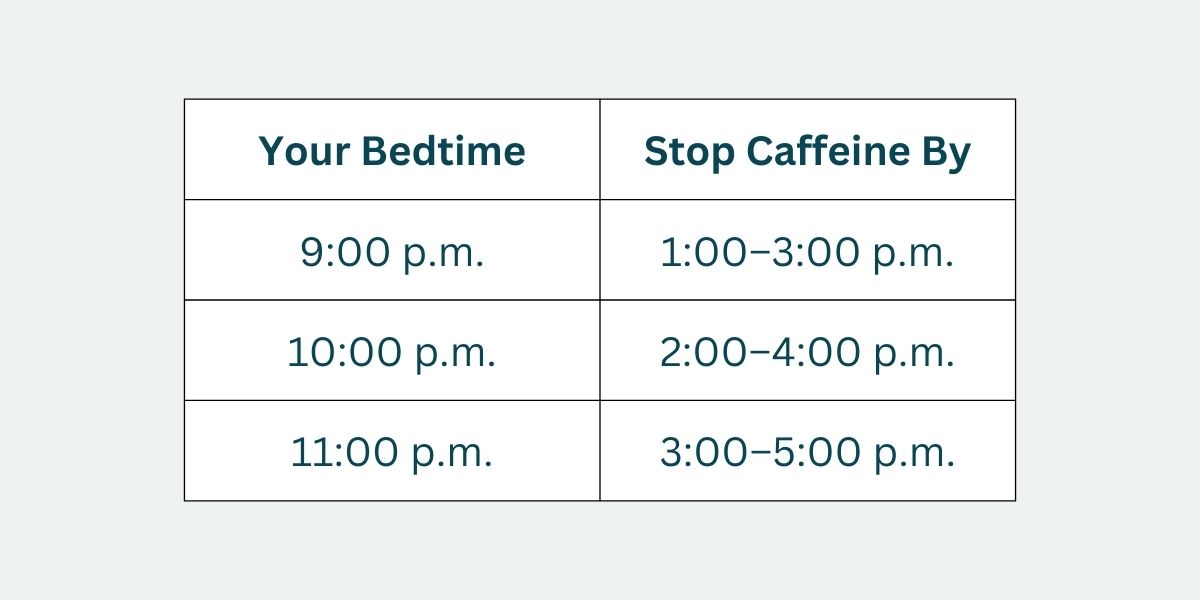
There’s no universally “safe” time to drink coffee. It depends on your genes, liver enzymes, and existing sleep health. For those with insomnia or anxiety, the margin needs to be wider.
What If You’re a Slow Metabolizer?
If you’re a slow metabolizer, caffeine lingers longer in your system, often doubling its half-life. That means a midday coffee could still be active at midnight.
Common signs:
- Feeling wired long after others seem relaxed.
- Struggling to sleep after moderate caffeine intake.
- Feeling anxious or restless from small doses.
- Waking up unrefreshed, despite spending 8 hours in bed.
Slow metabolizers are more prone to caffeine-induced insomnia, elevated blood pressure, and daytime fatigue. Switching to decaf or avoiding caffeine after 10 a.m. can help.
Does Decaf Still Affect Sleep?
Yes, decaf coffee still contains caffeine, just less of it. While less than regular coffee, even small amounts can disrupt sleep in sensitive individuals, slow metabolizers, or those with insomnia or anxiety.

How to Sleep Better Without Giving Up Coffee
Good news: You can still enjoy coffee without wrecking your sleep by beingstrategic.
- Time it carefully: Stop caffeine consumption at least 6–8 hours before bedtime. For sensitive individuals, stopping before noon may be necessary.
- Limit daily intake: Keep intake under 400 mg/day (that’s about 3–4 small cups). Consider hidden sources liketea, chocolate, soda, and medications.
- Know your threshold: Some people can tolerate 100 mg without issue. Others feel the effects from just 30 mg. Track how you feel and adjust.
- Try a caffeine reset: Going caffeine-free for 7–14 days can help recalibrate your tolerance and help you determine how much you really need.
- Switch your timing: Drink coffee only in the morning, ideally between 7 a.m. and 10 a.m., when cortisol naturally peaks.
- Replace your afternoon ritual: Herbal tea, hot lemon water, or golden milk can help maintain a comforting routine without caffeine’s side effects.
When to Consider Help for Sleep Issues
If you’ve optimized caffeine habits but still can’t sleep, something deeper may be going on. Caffeine might be exposing an underlying sleep disorder rather than causing it.
Seek professional evaluation if you:
- Take longer than 30 minutes to fall asleep, more than 3 nights per week, for over 3 months.
- Wake up multiple times during the night and struggle to return to sleep.
- Experience excessive daytime sleepiness, mood swings, or memory issues despite spending 7–9 hours in bed.
- Rely on caffeine to “feel normal” every day, but never feel truly rested.
- Develope sleep anxiety or dread bedtime.
Some sleep disorders can mimic fatigue or caffeine sensitivity,including insomnia, sleep apnea, restless legs, and circadian rhythm disorders. Without the right diagnosis, they’re often missed and left untreated.
Work With the Experts Who Specialize in Better Sleep
The Insomnia and Sleep Institute of Arizona finds real answers. We focus on identifying and treating the true causes of sleep problems.
Our team includes:
- Board-certified sleep physicians
- Licensed psychologists and behavioral sleep therapists
- Pulmonary and neurological specialists
We use gold-standard diagnostics like in-lab polysomnography and actigraphy and take the time to understand your full mental, physical, and emotional health. Whether the issue is caffeine sensitivity, circadian disruption, or undiagnosed sleep apnea, we find it, explain it clearly, and treat it effectively.
Caffeine isn’t inherently harmful, but poor timing and overuse can sabotage sleep. If coffee isn’t the only culprit, we’re here to help you reclaim the restorative sleep your body and brain deserve.
If caffeine isn’t the only thing keeping you up, we’re here. We’ll help you reclaim the sleep your brain and body have been missing.
References
- Gardiner, C. L., Weakley, J., Burke, L. M., Fernandez, F., Johnston, R. D., Leota, J., Russell, S., Munteanu, G., Townshend, A., & Halson, S. L. (2024). Dose and timing effects of caffeine on subsequent sleep: a randomized clinical crossover trial. SLEEP, 48(4). https://doi.org/10.1093/sleep/zsae230
- Caffeine sensitivity grows as people age. (2022, June). Uclahealth.org; UCLA Health. https://www.uclahealth.org/news/article/caffeine-sensitivity-grows-as-people-age
- What’s behind the idea of delaying your morning coffee? | The Department of Psychiatry, University of Arizona Health Sciences. (2023). Arizona.edu. https://psychiatry.arizona.edu/news/whats-behind-idea-delaying-your-morning-coffee
- What doctors wish patients knew about the impact of caffeine. (2025, July 25). American Medical Association. https://www.ama-assn.org/public-health/prevention-wellness/what-doctors-wish-patients-knew-about-impact-caffeine
- Temple, J. L., Bernard, C., Lipshultz, S. E., Czachor, J. D., Westphal, J. A., & Mestre, M. A. (2017). The Safety of Ingested Caffeine: A Comprehensive Review. Frontiers in Psychiatry, 8, 80–80. https://doi.org/10.3389/fpsyt.2017.00080
Disclaimer: The information provided in this blog post is for educational and informational purposes only and is not intended as a substitute for professional medical advice, diagnosis, or treatment. Always consult with a licensed healthcare provider for recommendations specific to your individual health needs.