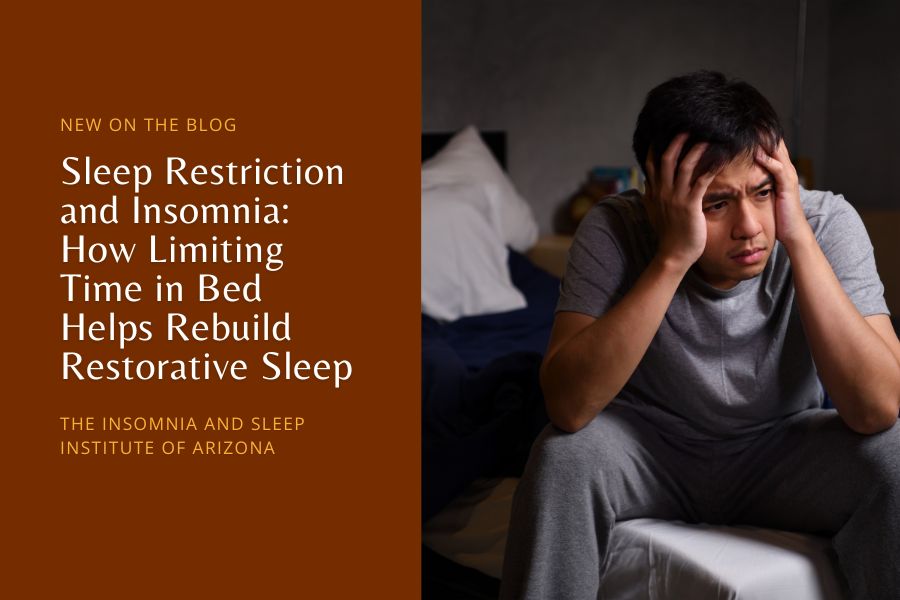
Sleep restriction therapy is a structured behavioral treatment that improves chronic insomnia by temporarily reducing the time you spend in bed to match the actual hours you sleep. While the name sounds counterintuitive, the goal is not to deprive your body of rest. Instead, it eliminates long, frustrating hours spent tossing and turning, consolidates broken sleep patterns, and rebuilds your natural biological drive to sleep. (1)(2)(3)(4)
According to data from the Centers for Disease Control and Prevention, 15.4% of U.S. adults report difficulty falling asleep most days or every day, while 18.1% struggle to stay asleep (1). In addition, 30.5% report sleeping less than the recommended 7 hours per night (1). When sleep disruption persists for at least 3 nights a week for 3 months or longer, it meets the clinical criteria for chronic insomnia, which can significantly affect daytime alertness, mood, work performance, and overall quality of life (2).
What Is Sleep Restriction Therapy in CBT-I?
Sleep restriction therapy is a core behavioral component of Cognitive Behavioral Therapy for Insomnia (CBT-I). Clinical guidelines recognize CBT-I as the first-line treatment for chronic insomnia because it directly addresses the underlying thoughts, conditioned behaviors, and schedule patterns that keep sleep disrupted (3)(4). In addition to sleep restriction, comprehensive CBT-I includes stimulus control, cognitive reframing, relaxation training, and targeted sleep education (3)(4).
When insomnia becomes chronic, the brain develops a conditioned association between the bed and wakefulness. Spending hours awake in bed watching the clock or worrying trains the nervous system to view the mattress as a cue for alertness rather than rest. Sleep restriction breaks this conditioned arousal by setting a compact sleep window that aligns time in bed with actual sleep duration (3)(4)(5).
Why Spending Extra Time in Bed Backfires
A frequent reaction to insomnia is spending 9 or 10 hours in bed, going to sleep early or sleeping in on weekends to make up for lost sleep. While this response is completely understandable, it often makes insomnia worse. Spending extra time awake in bed lowers your sleep efficiency, which is the percentage of time in bed actually spent sleeping.
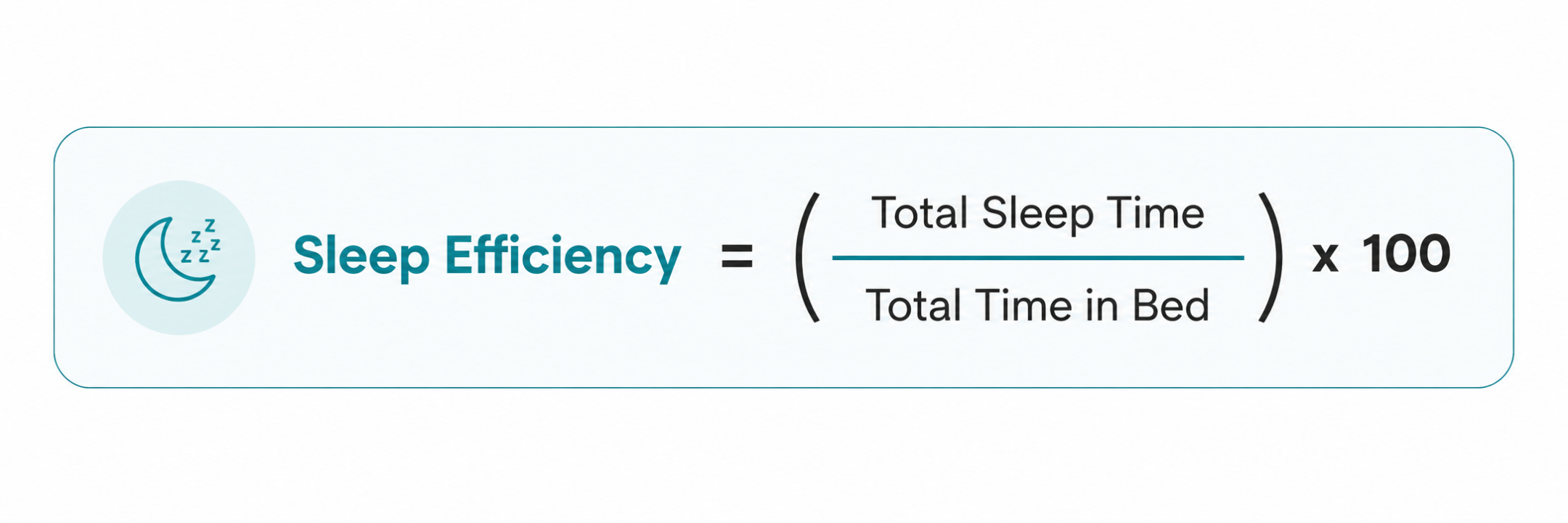
When sleep efficiency drops below 80% to 85%, sleep becomes fragmented into light, broken intervals interrupted by long awakenings. Restricting the time in bed compresses sleep into a continuous block. Once the body relearns how to consolidate sleep, clinicians can gradually expand the schedule safely (4)(5).
How the Clinical Protocol Works
In clinical practice, sleep restriction follows a structured, step-by-step framework rather than guesswork (5).
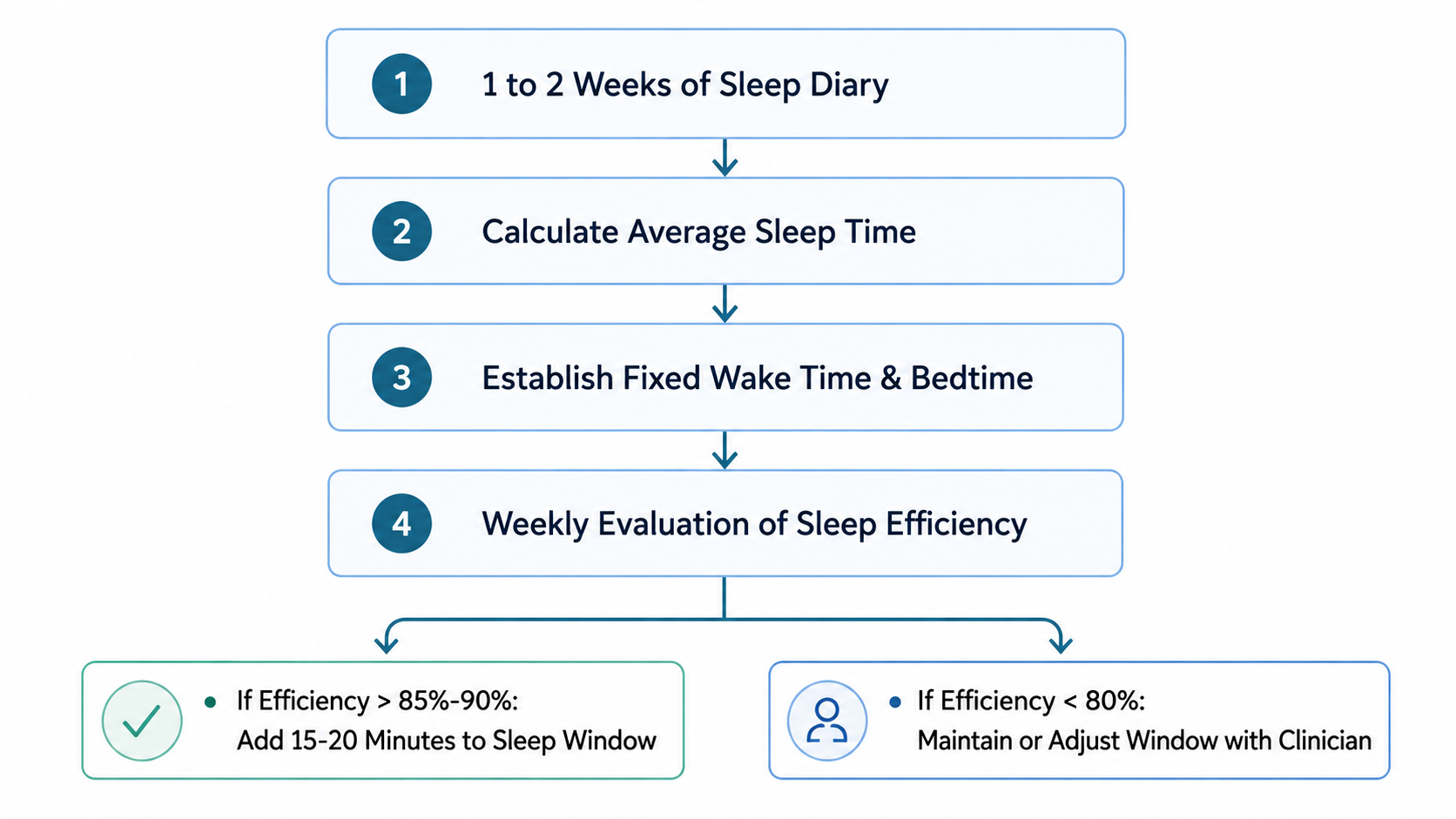
- Baseline Sleep Diary: The patient tracks bedtimes, wake times, nighttime awakenings, and total estimated sleep duration for 1 to 2 weeks to determine average total sleep time (5).
- Establishing the Sleep Window: A temporary sleep window is set based on that average. For example, if someone spends 8 hours in bed (from 10:00 p.m. to 6:00 a.m.) but only sleeps an average of 5.5 hours, the starting sleep window is set to approximately 5.5 or 6 hours (5).
- Anchoring the Wake Time: The morning wake time is kept consistent seven days a week to anchor the circadian rhythm. If the target wake time is 6:00 a.m. and the assigned window is 6 hours, the designated bedtime becomes 12:00 a.m. (5).
- Gradual Expansion: Sleep efficiency is reviewed weekly. When efficiency reaches 85% to 90% or higher, the clinician adds 15 to 20 minutes to the window by setting an earlier bedtime. The window continues to expand gradually until the patient achieves restorative sleep and optimal daytime energy (5).
What the Clinical Evidence Shows
Extensive medical research supports sleep restriction as an effective intervention for chronic sleep difficulties. A meta-analysis published in Sleep Medicine Reviews analyzed multiple clinical trials and confirmed that sleep restriction therapy significantly improves insomnia severity and sleep continuity, showing post-treatment benefits comparable to full multicomponent CBT-I protocols (6).
Safety Considerations and Managing Initial Fatigue
Because sleep restriction temporarily reduces the opportunity for sleep during the first 1 to 2 weeks, patients often experience temporary daytime sleepiness, fatigue, and reduced alertness during the initial phase (7)(8).
Clinical studies show that while acute sleep restriction can temporarily elevate daytime somnolence and impair vigilance, these effects are temporary and manageable under clinical guidance (7)(8). A randomized controlled trial evaluating sleep restriction alongside CBT-I demonstrated that the risk profile for excessive sleepiness is comparable and safe when properly supervised (7).
However, self-directed sleep restriction is not recommended for everyone. Individuals who operate commercial vehicles, work in safety-sensitive environments, or live with conditions such as bipolar disorder, seizure disorders, untreated sleep apnea, or chronic pain require careful medical supervision before modifying their sleep schedule (2)(7)(8).
Sleep Restriction vs. Sleep Hygiene
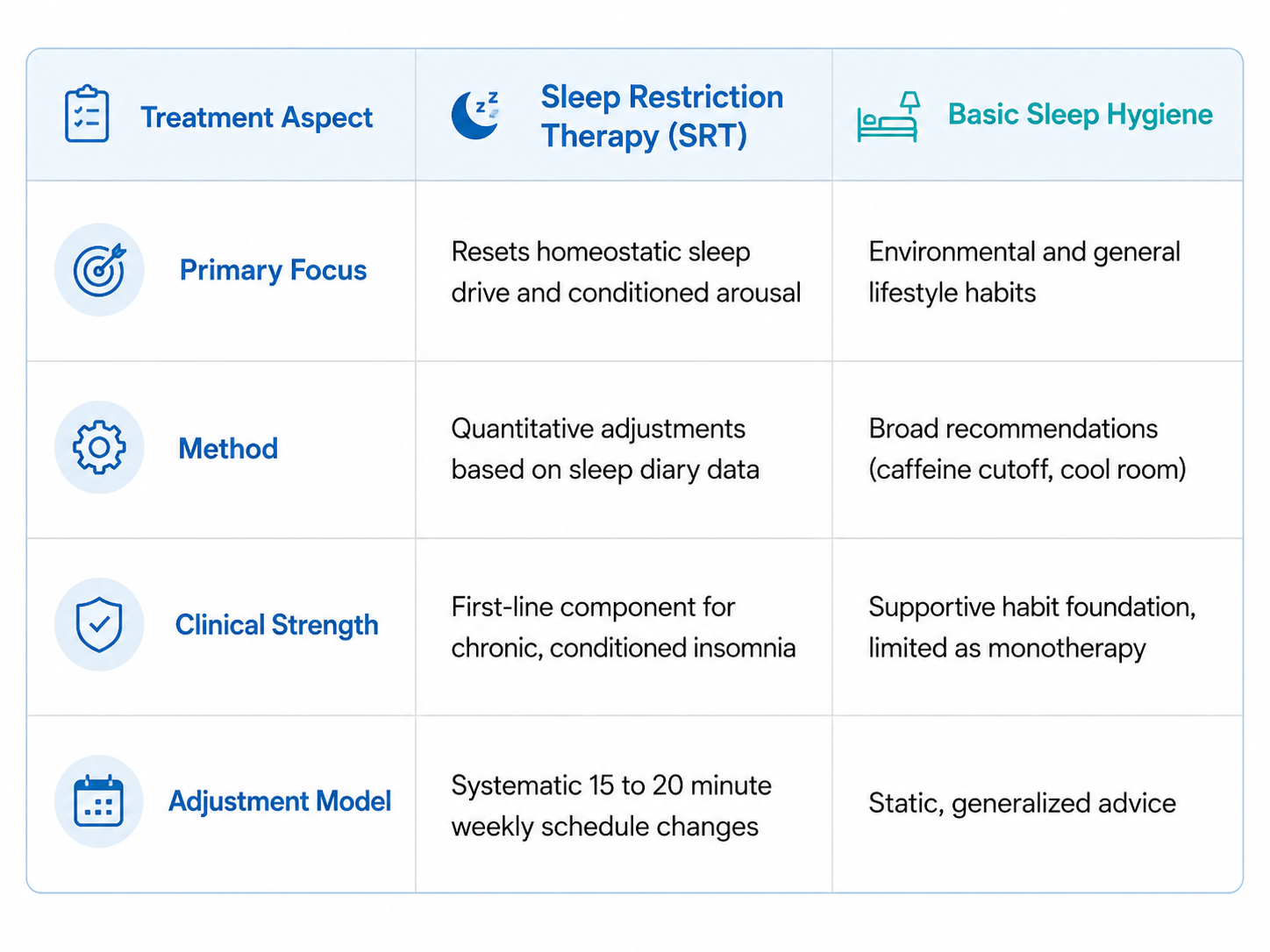
Many patients seek medical guidance after trying basic sleep hygiene tips without success. While lowering bedroom temperature, dimming lights, and avoiding evening caffeine are beneficial habits, sleep hygiene alone is rarely sufficient for long-standing insomnia (4)(9).
A landmark randomized clinical trial (the HABIT trial) published in Health Technology Assessment evaluated nurse-delivered sleep restriction therapy in primary care. Patients receiving sleep restriction experienced a substantial reduction in insomnia severity compared to those receiving sleep hygiene education alone, achieving an adjusted 3.05-point improvement on the Insomnia Severity Index alongside meaningful gains in mental health and daytime productivity (9).
Sleep hygiene optimizes your external environment, whereas sleep restriction directly repairs the physiological sleep drive and resets behavioral conditioning (4)(9).
When to Consult a Sleep Specialist
The Insomnia and Sleep Institute of Arizona is a physician-owned and operated sleep medicine center with locations in Phoenix, Scottsdale, and Gilbert. Our team evaluates adult and pediatric sleep disorders, and our care is centered on sleep medicine every day.
We are proud to be led by sleep medicine professionals, including board-certified sleep physicians, clinical psychologists focused on CBT-I, physician assistants trained in sleep medicine, and medical support teams who understand how exhausting chronic insomnia can feel.
If you are considering sleep restriction, CBT-I, or insomnia treatment, contact us for a consultation. We can review your symptoms, your sleep schedule, your medical history, and signs that another sleep disorder may be involved. Our team can help you find out why sleep has become so difficult and what treatment options make sense for your nights.
References
- Ng, A. (2026). Short Sleep Duration and Sleep Difficulties Among Adults: United States, 2024. https://doi.org/10.15620/cdc/252438
- McNamara, S., Spurling, B. C., & Bollu, P. C. (2025, March 28). Chronic Insomnia. Nih.Gov; StatPearls Publishing. https://www.ncbi.nlm.nih.gov/books/NBK526136/
- Checking your browser – reCAPTCHA. (2024). Nih.Gov. https://pubmed.ncbi.nlm.nih.gov/27136449/
- Checking your browser – reCAPTCHA. (2024). Nih.Gov. https://pubmed.ncbi.nlm.nih.gov/33164742/
- Stanford Health Care. (2017, September). Stanfordhealthcare.Org. https://stanfordhealthcare.org/medical-treatments/c/cognitive-behavioral-therapy-insomnia/procedures/sleep-restriction.html
- Maurer, L. F., Schneider, J., Miller, C. B., Espie, C. A., & Kyle, S. D. (2021). The clinical effects of sleep restriction therapy for insomnia: A meta-analysis of randomised controlled trials. Sleep Medicine Reviews, 58, 101493. https://doi.org/10.1016/j.smrv.2021.101493
- Cheng, P., Kalmbach, D., Fellman-Couture, C., Arnedt, J. T., Cuamatzi-Castelan, A., & Drake, C. L. (2020). Risk of excessive sleepiness in sleep restriction therapy and cognitive behavioral therapy for insomnia: a randomized controlled trial. Journal of Clinical Sleep Medicine, 16(2), 193–198. https://doi.org/10.5664/jcsm.8164
- Kyle, S. D., Miller, C. B., Rogers, Z., Siriwardena, A. N., MacMahon, K. M., & Espie, C. A. (2014). Sleep Restriction Therapy for Insomnia is Associated with Reduced Objective Total Sleep Time, Increased Daytime Somnolence, and Objectively Impaired Vigilance: Implications for the Clinical Management of Insomnia Disorder. Sleep, 37(2), 229–237. https://doi.org/10.5665/sleep.3386
- Kyle, S. D, Bower, P., Yu, L.-M., Siriwardena, A. N., Yang, Y., Petrou, S., Ogburn, E., Begum, N., Maurer, L., Robinson, B., Gardner, C., Armstrong, S., Pattinson, J., Espie, C. A., & Aveyard, P. (2024). Nurse-delivered sleep restriction therapy to improve insomnia disorder in primary care: the HABIT RCT. Health Technology Assessment, 1–107. https://doi.org/10.3310/rjyt4275
Disclaimer: The information provided in this blog post is for educational and informational purposes only and is not intended as a substitute for professional medical advice, diagnosis, or treatment. Always consult with a licensed healthcare provider for recommendations specific to your individual health needs.