Waking up with a parched, sticky mouth in the desert is common, but Arizona heat is rarely the only cause. While low humidity accelerates evaporation, chronic morning dry mouth (xerostomia) is can be triggered by nocturnal mouth breathing, obstructive sleep apnea, or drying medications. Saliva serves as your oral cavity’s primary defense against bacteria, which means frequent morning dryness is an important clinical symptom rather than just a minor seasonal annoyance. (1)
Why Does the Arizona Desert Climate Worsen Overnight Dryness?
Arizona’s arid climate creates an environment where hydration evaporates quickly, both outdoors and indoors. The National Weather Service in Phoenix frequently highlights how quickly dry heat can cause dehydration, advising consistent daily fluid intake even when you do not actively feel thirsty. (2)
During hot summers and cool winter nights, indoor climate control adds to the challenge. Running an air conditioner or heater pulls remaining moisture from the air, dropping indoor relative humidity levels well below comfortable thresholds. Sleeping in these environments accelerates moisture loss from oral tissues. (3)
Phoenix’s desert climate can make nighttime dryness more noticeable. ACHR News, an HVAC trade publication, has reported that “the air is very dry most of the time in this part of the country,” with average humidity in the Phoenix area around 35% to 40% during much of the year and sometimes dropping lower. Spending seven to eight hours breathing dry, temperature-controlled air can increase moisture loss from the nasal passages and throat. The nose normally helps warm and humidify the air you breathe, so persistent morning dryness may become more noticeable with mouth breathing, snoring, nasal congestion, certain medications, or sleep disorders such as obstructive sleep apnea.
Could Overnight Mouth Breathing Be the Problem?
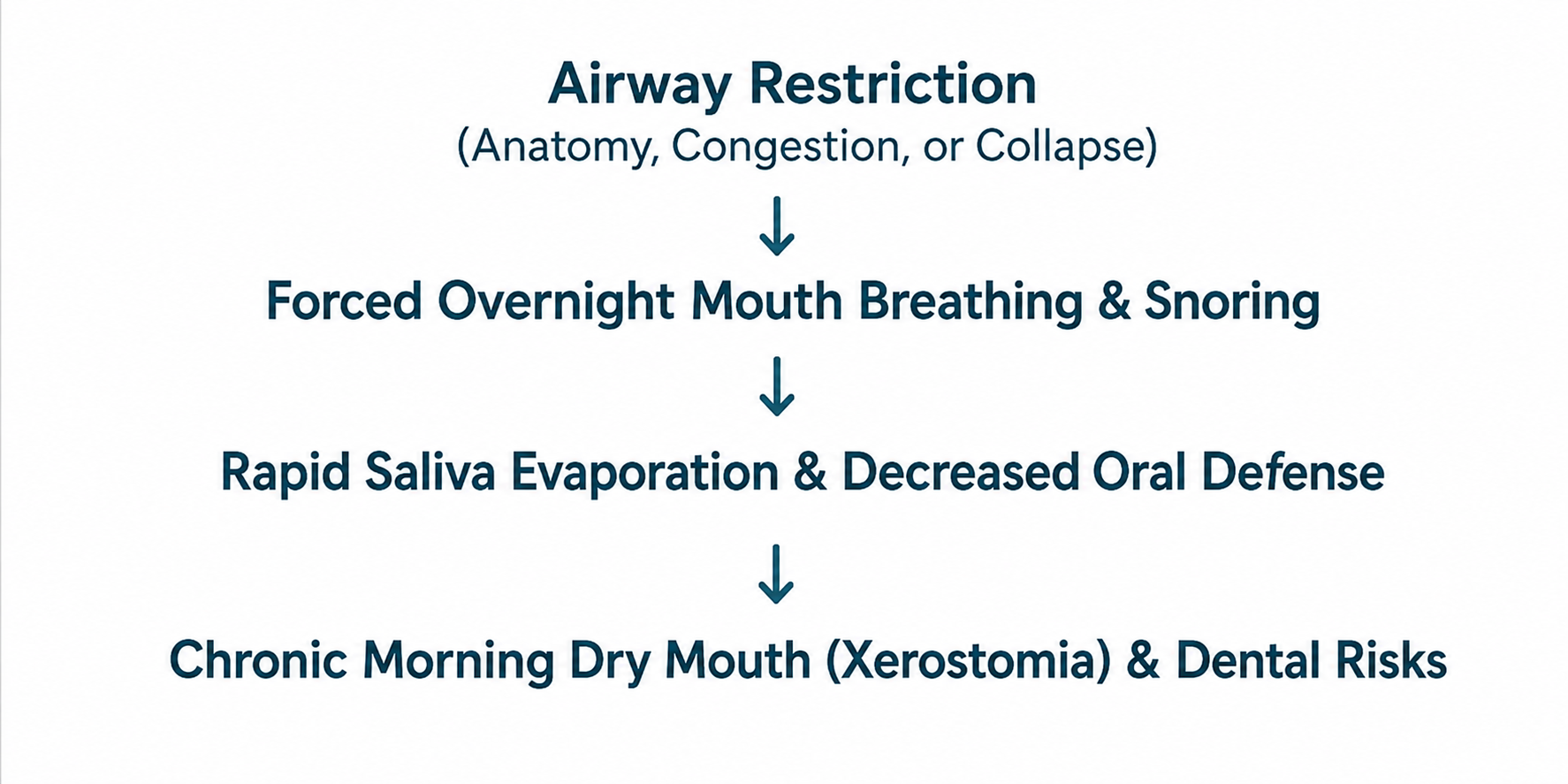
Under normal conditions, your nasal passages help filter, warm, and humidify the air you breathe. When nasal congestion, allergies, a deviated septum, or other structural narrowing restrict nasal airflow, the body may compensate by opening the mouth and shifting toward oral breathing.
When ambient air bypasses the nasal passages and flows directly over the tongue, palate, and throat for hours at a time, saliva evaporates faster than salivary glands can replenish it. This airflow pattern leads directly to a sticky tongue, cracked lips, and chronic morning bad breath. Furthermore, open-mouth sleeping frequently leads to snoring because the relaxed tissues of the soft palate vibrate as air rushes past them. (4)
Could Your Morning Dry Mouth Be an Unnoticed Sign of Obstructive Sleep Apnea?
When snoring and mouth breathing occur together, they often indicate obstructive sleep apnea (OSA). Sleep apnea is a sleep disorder where the muscles in the throat relax excessively during sleep, causing the upper airway to collapse. This leads to repeated pauses in breathing throughout the night. Common symptoms include loud habitual snoring, gasping for air during awakenings, morning headaches, daytime fatigue, and waking up with a dry mouth. (5)(6)
A clinical study evaluated nocturnal moisture loss and confirmed that waking with a dry mouth is exceptionally common among patients with obstructive sleep apnea, with prevalence rates between 22.4% and 40.7%. (7) The researchers established that higher airway resistance forces patients into continuous mouth breathing, which directly multiplies overnight water loss from the oral cavity.
Are Prescription Medications Lowering Your Saliva Flow?
While structural breathing issues account for many cases, prescription and over-the-counter medications represent another primary cause of morning oral dryness. Hundreds of common medications reduce salivary gland secretion as a side effect. (1)
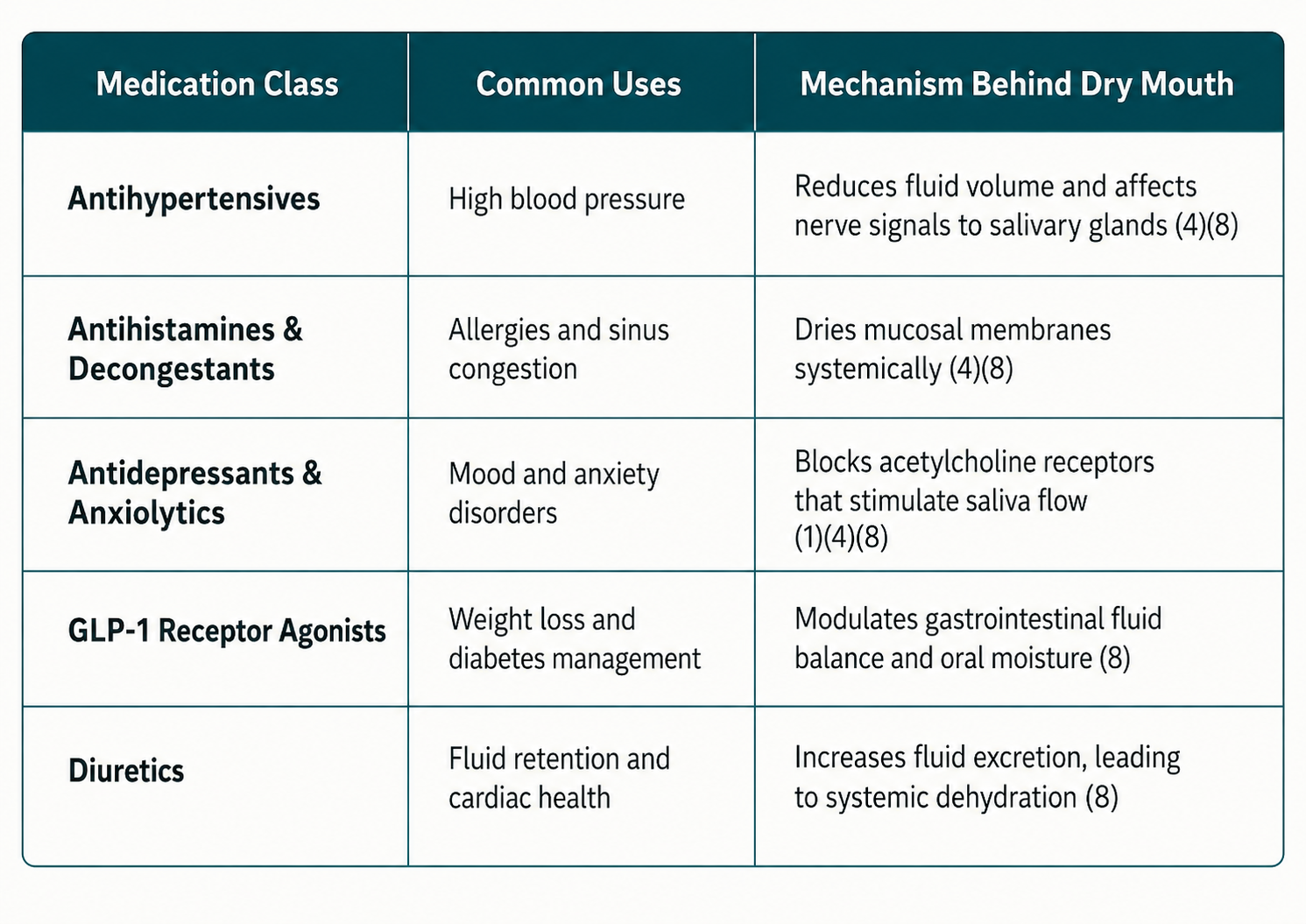
If your dry mouth began shortly after starting a new prescription or adjusting a dosage, your medication regimen may be the primary cause. However, medications should never be discontinued without consulting your prescribing physician.
What Practical Steps Can You Take at Home to Restore Moisture?
If your dry mouth is mild and unrelated to an airway collapse, targeted lifestyle adjustments can help restore nighttime oral comfort. (3)(9)
- Add a Cool-Mist Humidifier: Place a humidifier near your bed to maintain bedroom humidity between 40% and 50%, reducing moisture evaporation while you sleep. (3)(9)
- Switch to Alcohol-Free Oral Care: Standard mouthwashes containing alcohol can worsen oral dryness. Choose enzymatic or lubricating oral rinses formulated specifically for dry mouth relief. (9)
- Stimulate Saliva Before Bed: Chewing sugar-free gum or using xylitol lozenges before sleep encourages natural salivary flow and protects teeth from overnight bacterial growth. (3)(9)
- Support Daytime Hydration: Sip water consistently throughout the day rather than chugging large amounts right before bed, which can disrupt sleep with frequent bathroom trips. (2)(3)
When Should You Have Your Sleep Evaluated by a Specialist?
Home remedies and extra glasses of water cannot correct a physical airway obstruction. If you wake up with a parched throat alongside loud snoring, choking sensations, morning headaches, or unrefreshing sleep, the root problem is likely respiratory rather than environmental.
Left untreated, chronic xerostomia increases the long-term risk of dental cavities, gum disease, and mouth infections because your mouth lacks protective saliva. Concurrently, untreated sleep apnea places ongoing strain on your cardiovascular system.
In our clinical practice at The Insomnia and Sleep Institute of Arizona, our sleep physicians diagnose and treat the underlying causes of nighttime mouth breathing, snoring, and sleep apnea. Serving Scottsdale, Gilbert, and Phoenix, Arizona, our team provides diagnostic evaluations to determine whether your dry mouth may be linked to an obstructed airway. If nighttime dry mouth occurs alongside other signs of sleep apnea, contact us to schedule an evaluation.
References
- Dry Mouth. (2019). Nih.Gov. https://www.nidcr.nih.gov/health-info/dry-mouth
- US. (2020). NWS Phoenix Heat Page. Weather.Gov. https://www.weather.gov/psr/heat
- Dry Mouth. (2024). Medlineplus.Gov; National Library of Medicine. https://medlineplus.gov/drymouth.html
- Dry mouth – Symptoms and causes. (2026). Mayo Clinic; . https://www.mayoclinic.org/diseases-conditions/dry-mouth/symptoms-causes/syc-20356048
- Symptoms. (2025, January 9). Nhlbi, NIH. https://www.nhlbi.nih.gov/health/sleep-apnea/symptoms
- Sleep apnea – Symptoms and causes. (2026). Mayo Clinic; . https://www.mayoclinic.org/diseases-conditions/sleep-apnea/symptoms-causes/syc-20377631
- Su, V. Y.-F., Chou, K.-T., Tseng, C.-H., Kuo, C.-Y., Su, K.-C., Perng, D.-W., Chen, Y.-M., & Chang, S.-C. (2022). Mouth opening/breathing is common in sleep apnea and linked to more nocturnal water loss. Biomedical Journal, 46(3), 100536. https://doi.org/10.1016/j.bj.2022.05.001
- Xerostomia (Dry Mouth). (2018). Ada.Org. https://www.ada.org/resources/ada-library/oral-health-topics/xerostomia
- Dry mouth treatment: Tips for controlling dry mouth. (2023). Mayo Clinic. https://www.mayoclinic.org/diseases-conditions/dry-mouth/expert-answers/dry-mouth/faq-20058424
Disclaimer: The information provided in this blog post is for educational and informational purposes only and is not intended as a substitute for professional medical advice, diagnosis, or treatment. Always consult with a licensed healthcare provider for recommendations specific to your individual health needs.