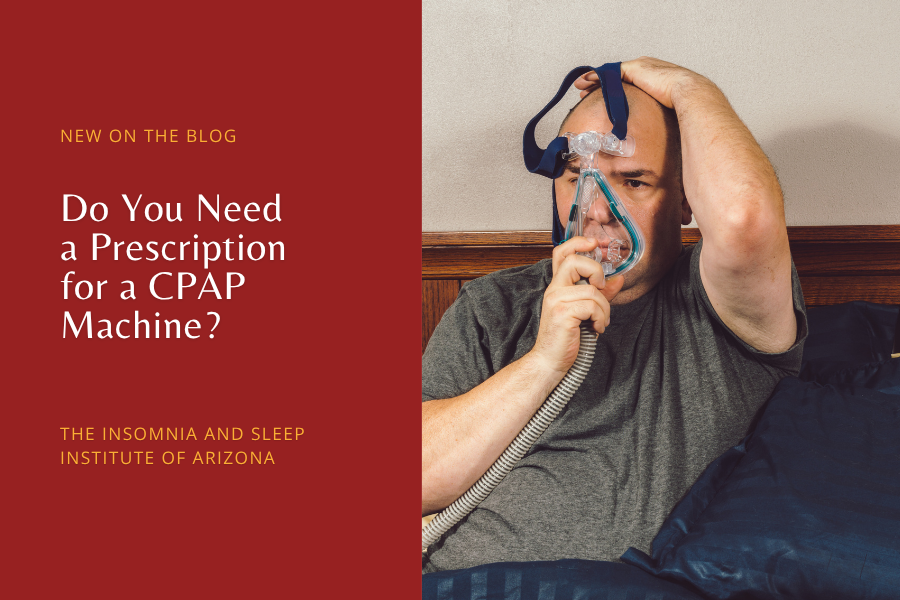
In the United States, you must have a valid prescription from a licensed medical provider to purchase a CPAP machine.
In our sleep clinic, patients frequently ask why continuous positive airway pressure (CPAP) devices cannot be bought off the shelf. Symptoms like loud snoring, waking up gasping for air, or feeling exhausted after a full night of sleep strongly suggest obstructive sleep apnea, but symptoms alone cannot confirm the diagnosis (1). Because a CPAP machine directly adjusts your breathing pressure during sleep, federal regulations classify it as a prescription-only medical system (2).
Sleep apnea is a widespread condition that affects an estimated 936 million adults aged 30 to 69 globally (3). Public figures have made sleep apnea treatment more visible. Former President Joe Biden has used CPAP, while Shaquille O’Neal has spoken about improved sleep and energy after treatment.
CPAP has also appeared on shows like The Sopranos and Brooklyn Nine-Nine, making sleep apnea therapy more familiar to the public.
Why Our Sleep Physicians Require a Prescription
A CPAP machine uses air pressure to hold your upper airway open while you sleep. However, air pressure must be tailored to your specific airway anatomy and condition severity. Sleep apnea severity is measured using the Apnea-Hypopnea Index, which counts how many times your breathing pauses or narrows per hour of sleep (4).
If the air pressure setting is too low, your airway will continue to collapse, leaving your sleep apnea untreated. If the setting is too high, you may suffer from uncomfortable side effects such as swallowed air, dry mouth, severe mask leaks, or treatment-induced central sleep apneas. A prescription ensures that your device is calibrated to objective medical findings rather than guesswork.
A prescription is also essential for health insurance coverage. Medicare requires a formal clinical diagnosis and documented adherence before it pays for machines and replacement supplies. Official coverage standards define adherence as using the device for at least four hours per night on 70 percent of nights during a consecutive 30-day period within the first three months of use (5).
The Dangers of Buying CPAP Equipment Without a Prescription
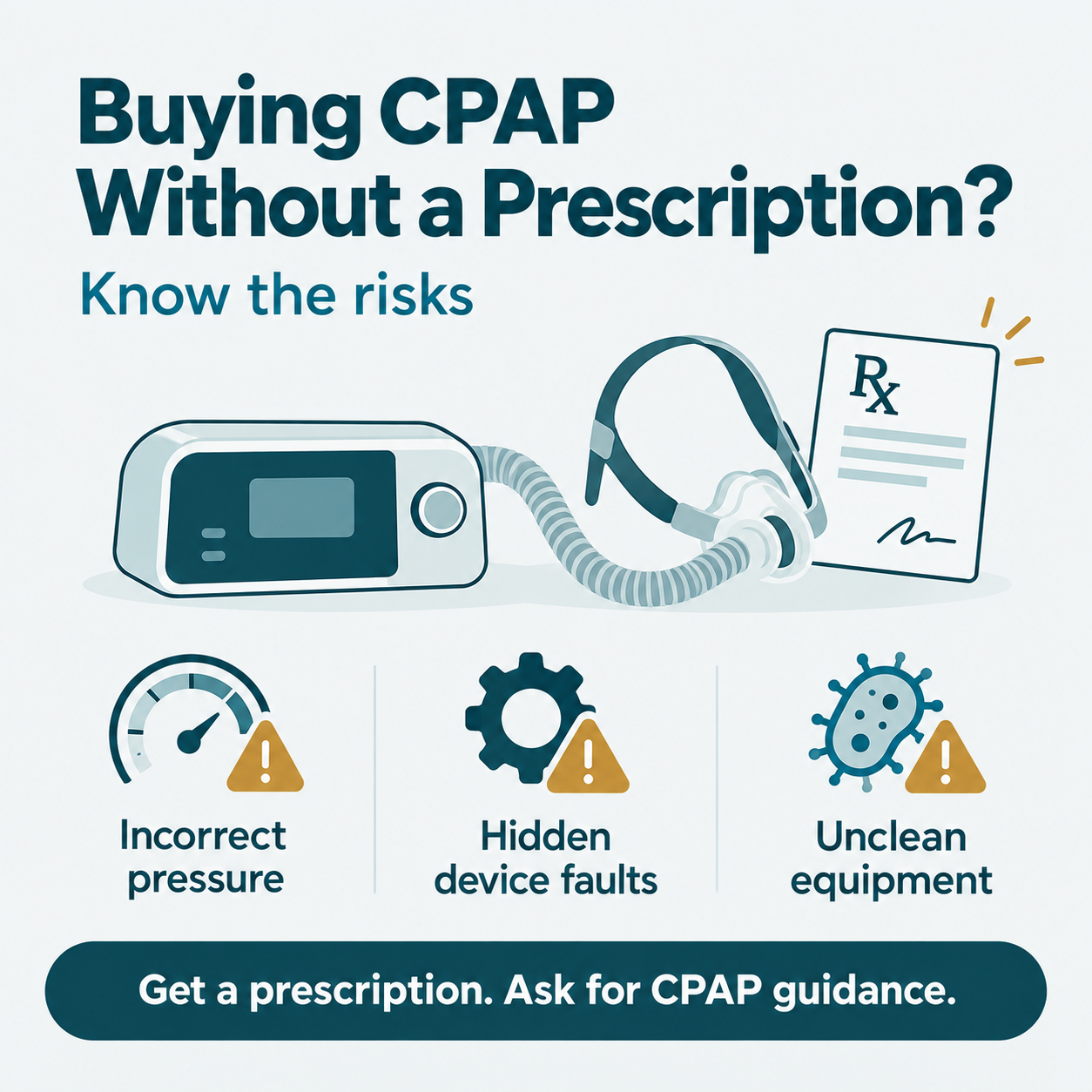
When faced with out-of-pocket costs or long appointment wait times, some individuals may attempt to buy secondhand CPAP machines online. The FDA classifies positive airway pressure delivery systems used to treat obstructive sleep apnea as prescription devices (2).
Attempting to bypass this clinical process creates significant health risks. A JAMA Internal Medicine study of secondhand CPAP listings on Craigslist found that many sellers left out basic details, including how long the device had been used and what condition it was in. Without clinical evaluation, buying an unverified machine risks incorrect pressure settings, hidden mechanical faults, or exposure to unsterilized equipment (9).
Even with a proper prescription, adapting to CPAP therapy requires guidance. Medical studies show that between 46 percent and 83 percent of sleep apnea patients do not use CPAP for more than four hours a night (6).
The Process to Obtain Your CPAP Prescription
Our sleep team guides patients through a structured diagnostic path to ensure treatment is safe and effective.
1. Diagnostic Sleep Testing
We evaluate your symptoms, medical history, and risk factors before ordering an objective sleep test. This can be an overnight in-lab polysomnography at our sleep center or a convenient home sleep apnea test. Polysomnography records key bodily functions during sleep, including airflow, brain waves, heart rate, and blood oxygen levels (7).
2. Categorizing Apnea Severity
Using your sleep study results, our sleep physicians calculate your Apnea-Hypopnea Index score to determine severity (4):
- Mild sleep apnea: 5 to 15 breathing events per hour
- Moderate sleep apnea: 15 to 30 breathing events per hour
- Severe sleep apnea: Greater than 30 breathing events per hour
3. Custom Prescription and Calibration
If obstructive sleep apnea is diagnosed, our sleep physicians write a detailed prescription specifying your exact pressure settings, device mode (such as Auto-CPAP or BiPAP), and recommended mask style.
4. Ongoing Monitoring and Support
Modern CPAP devices record and transmit daily usage data (8). Our clinical team uses this data to track your progress, troubleshoot comfort issues like mask fit, and adjust pressure settings remotely to ensure long-term success.
We Provide Precise Sleep Apnea Diagnosis and CPAP Guidance at The Insomnia and Sleep Institute of Arizona
At the Insomnia and Sleep Institute of Arizona, treatment begins with accurate diagnosis and clear data.
We evaluate sleep using validated testing methods. Results are explained in detail. Treatment plans are based on measured findings, not assumptions.
We guide each step of care:
- Sleep testing with detailed analysis
- Clear interpretation of results
- CPAP setup with appropriate pressure and mask
- Follow-up using real usage data
We address both airway function and sleep behavior. That improves your comfort, consistency, and long-term results.
We serve patients across Phoenix, Scottsdale, and Gilbert. You can contact us anytime.
References
- Kapur, V. K., Auckley, D. H., Chowdhuri, S., Kuhlmann, D. C., Mehra, R., Ramar, K., & Harrod, C. G. (2017). Clinical Practice Guideline for Diagnostic Testing for Adult Obstructive Sleep Apnea: An American Academy of Sleep Medicine Clinical Practice Guideline. Journal of Clinical Sleep Medicine, 13(03), 479–504. https://doi.org/10.5664/jcsm.6506
- Medical Devices; Anesthesiology Devices; Classification of the Positive Airway Pressure Delivery System. (2018, October 19). Federal Register. https://www.federalregister.gov/documents/2018/10/19/2018-22840/medical-devices-anesthesiology-devices-classification-of-the-positive-airway-pressure-delivery
- Benjafield, A. V., Ayas, N. T., Eastwood, P. R., Heinzer, R., Ip, M. S. M., Morrell, M. J., Nunez, C. M., Patel, S. R., Penzel, T., Pépin, J.-L., Peppard, P. E., Sinha, S., Tufik, S., Valentine, K., & Malhotra, A. (2019). Estimation of the global prevalence and burden of obstructive sleep apnoea: a literature-based analysis. The Lancet Respiratory Medicine, 7(8), 687–698. https://doi.org/10.1016/s2213-2600(19)30198-5
- Slowik, J. M., Abdulghani Sankari, & Collen, J. F. (2025, March 4). Obstructive Sleep Apnea. Nih.Gov; StatPearls Publishing. https://www.ncbi.nlm.nih.gov/books/NBK459252/
- Centers for Medicare & Medicaid Services. (n.d.). Local Coverage Determination L33718: Positive Airway Pressure (PAP) Devices for the Treatment of Obstructive Sleep Apnea. https://www.cms.gov/medicare-coverage-database/view/lcd.aspx?lcdid=33718
- Weaver, T. E., & Grunstein, R. R. (2008). Adherence to Continuous Positive Airway Pressure Therapy: The Challenge to Effective Treatment. Proceedings of the American Thoracic Society, 5(2), 173–178. https://doi.org/10.1513/pats.200708-119mg
- Sleep Study. (2024). Medlineplus.Gov. https://medlineplus.gov/lab-tests/sleep-study/
- Cistulli, P. A., Armitstead, J., Pepin, J.-L., Woehrle, H., Nunez, C. M., Benjafield, A., & Malhotra, A. (2019). Short-term CPAP adherence in obstructive sleep apnea: a big data analysis using real world data. Sleep Medicine, 59, 114–116. https://doi.org/10.1016/j.sleep.2019.01.004
- Peine, M. I., Prichard, J. R., & Kunisaki, K. M. (2016). Unauthorized Online Sales of Secondhand Continuous Positive Airway Pressure Devices. JAMA Internal Medicine, 176(10), 1559. https://doi.org/10.1001/jamainternmed.2016.4506
Disclaimer: The information provided in this blog post is for educational and informational purposes only and is not intended as a substitute for professional medical advice, diagnosis, or treatment. Always consult with a licensed healthcare provider for recommendations specific to your individual health needs.