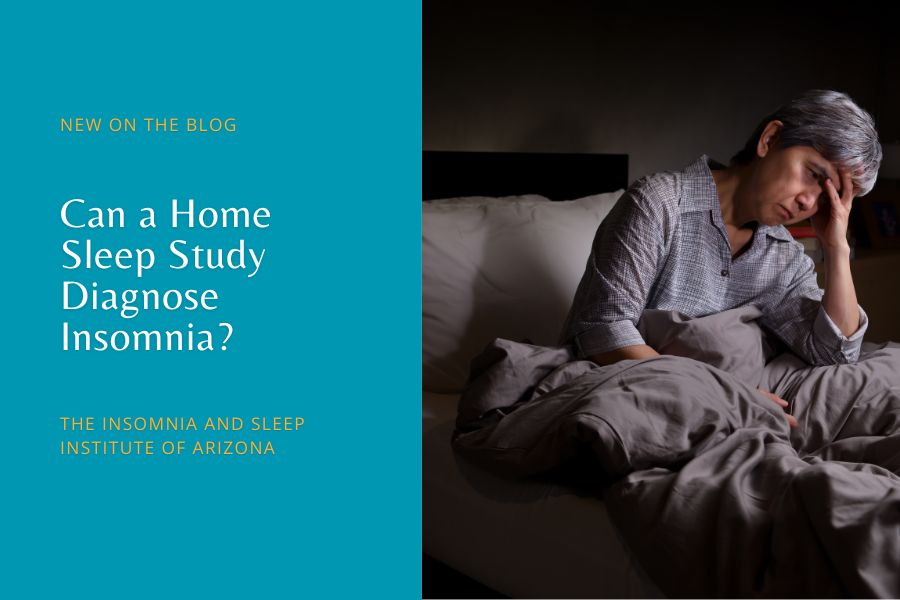
No, but stick around for the explanation because it gets complicated. A home sleep study is really just a breathing test that detects sleep apnea. Sleep apnea is a condition where you periodically stop breathing during sleep, which causes poor sleep quality. A home sleep study tracks airflow, oxygen levels, and heart rate. It doesn’t do anything more than that. If you’re having trouble sleeping due to your breathing, that’s sleep apnea not insomnia.
We don’t use a device to diagnose insomnia. Insomnia is diagnosed by systematically working through every possible reason your sleep could be broken.
Insomnia Is a Diagnosis of Exclusion
Before we can confidently call something chronic insomnia, we need to rule out everything else that disrupts sleep. That includes sleep apnea, restless legs syndrome, circadian rhythm disorders, thyroid problems, pain conditions, anxiety, depression, and the effects of medications, caffeine, and alcohol. A home sleep test gives us insight into one of these issues (sleep apnea).
Our actual diagnostic process involves a detailed clinical interview covering your medical history, sleep habits, stress levels, and daytime functioning. A sleep diary tracking your bedtime, sleep latency, nighttime awakenings, and morning wake time over several nights adds detail that one night of breathing data never could. Standardized questionnaires help quantify how much the problem is affecting your daily life. Together, these paint a picture that no wearable device can replicate.
But You Might Not Have Insomnia
About half our patients who come to us convinced they have insomnia actually have obstructive sleep apnea. The surface symptoms are very similar: difficulty falling asleep, waking repeatedly, dragging through the day exhausted. The cause and the treatment are completely different.
Sleep apnea is one of the first things to rule out, which is where a home sleep study can play a role. But it comes with an important limitation: home sleep tests have a high false negative rate. They calculate breathing events across your total time in bed, not just actual sleep time. If you spend a lot of time lying awake, which is common when sleep apnea is present, the breathing data gets diluted, and the test can come back normal even when sleep apnea is present. A negative result doesn’t rule it out. When sleep apnea is suspected, an in-lab sleep study is the more reliable option and remains the diagnostic gold standard.
What You Actually Need
If you’ve been struggling with sleep and you’re not sure what’s causing it, maybe it’s time to see a sleep physician. That uncertainty is the most important thing to bring to us when you come in, not a home test result. The goal isn’t to confirm a diagnosis you’ve already given yourself. It’s to work through the real possibilities systematically until the actual cause is found.
At The Insomnia and Sleep Institute of Arizona, we evaluate insomnia, sleep apnea, restless legs, circadian rhythm disorders, and other conditions that overlap and mimic each other. If you’ve already had a normal home sleep test but still can’t sleep, that’s not the end of the evaluation. Contact us to schedule a proper sleep evaluation and get a clearer picture of what’s actually going on.
Get the Right Sleep Test With The Insomnia and Sleep Institute of Arizona
A home sleep study can help identify obstructive sleep apnea, but it cannot diagnose insomnia by itself. If you are lying awake for hours, waking up repeatedly, waking too early, or feeling exhausted during the day, we can help you understand what kind of evaluation fits your symptoms.
The Insomnia and Sleep Institute of Arizona evaluates insomnia, sleep apnea, restless legs symptoms, narcolepsy concerns, hypersomnia, CPAP problems, and other sleep disorders. Our team looks at the full picture because real sleep symptoms often overlap. A home sleep apnea test may be useful for some patients, and an in-lab sleep study may be better for others.
We help patients understand what a home sleep study can show, what it cannot show, and what to do after the results come back. If your test was normal but your sleep still feels wrong, we can help review what may have been missed. If your test showed sleep apnea but you still cannot sleep well, we can check whether insomnia or another sleep disorder is still affecting your rest.
Contact The Insomnia and Sleep Institute of Arizona to schedule a careful sleep evaluation and get a clearer plan for better sleep. We have sleep clinics in Phoenix, Scottsdale and Gilbert, Arizona.
References
- Kapur, V. K., Auckley, D. H., Chowdhuri, S., Kuhlmann, D. C., Mehra, R., Ramar, K., & Harrod, C. G. (2017). Clinical Practice Guideline for Diagnostic Testing for Adult Obstructive Sleep Apnea: An American Academy of Sleep Medicine Clinical Practice Guideline. Journal of Clinical Sleep Medicine, 13(3), 479–504. https://doi.org/10.5664/jcsm.6506
- Ng, A. (2026). Short Sleep Duration and Sleep Difficulties Among Adults: United States, 2024. https://doi.org/10.15620/cdc/252438
- Diagnosis. (2022, March 24). Nhlbi, NIH. https://www.nhlbi.nih.gov/health/insomnia/diagnosis
- Ong, J. C., Crawford, M. R., & Wallace, D. M. (2021). Sleep Apnea and Insomnia. Chest, 159(5), 2020–2028. https://doi.org/10.1016/j.chest.2020.12.002
- Bianchi, M. T., & Goparaju, B. (2017). Potential Underestimation of Sleep Apnea Severity by At-Home Kits: Rescoring In-Laboratory Polysomnography Without Sleep Staging. Journal of Clinical Sleep Medicine, 13(4), 551–555. https://doi.org/10.5664/jcsm.6540
- McNamara, S., Spurling, B. C., & Bollu, P. C. (2025, March 28). Chronic Insomnia. Ncbibooks; StatPearls Publishing. https://www.ncbi.nlm.nih.gov/books/NBK526136/
- ACP Recommends Cognitive Behavioral Therapy as Initial Treatment for Chronic Insomnia | ACP Online. (2026). Acponline.Org. https://www.acponline.org/acp-newsroom/acp-recommends-cognitive-behavioral-therapy-as-initial-treatment-for-chronic-insomnia
Disclaimer: The information provided in this blog post is for educational and informational purposes only and is not intended as a substitute for professional medical advice, diagnosis, or treatment. Always consult with a licensed healthcare provider for recommendations specific to your individual health needs.