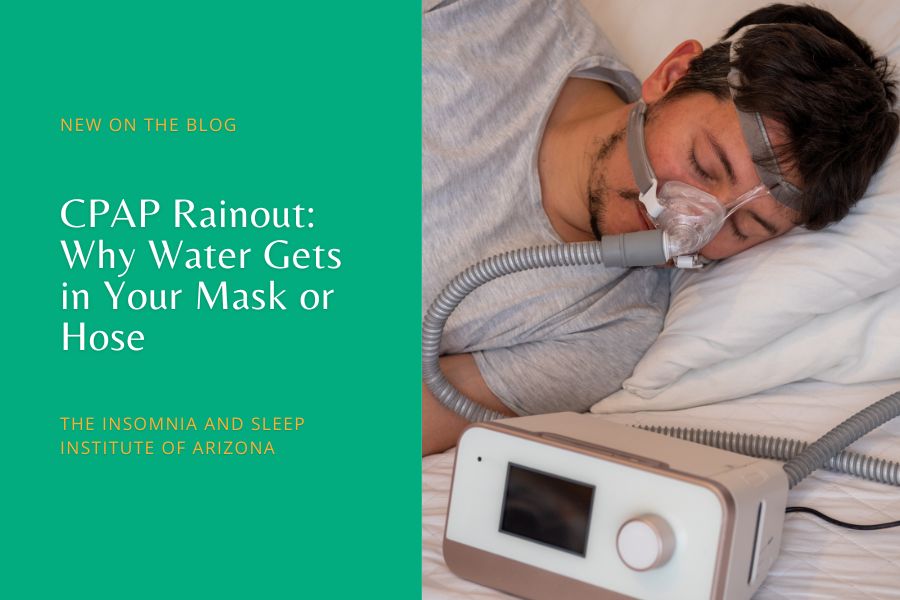
CPAP Rainout: Why Water Gets in Your Mask or Hose
Although CPAP continues to be the gold standard for obstructive sleep apnea treatment, it is not always fun to use. Getting your life back is fun. Being able to sleep is fun. But some aspects of adapting to the machinery can be a challenge. As comedian Amy Poehler commented: “You know it’s good for you, but most of the time you don’t feel like it.” CPAP rainout is a perfect example of one of the downsides of PAP.
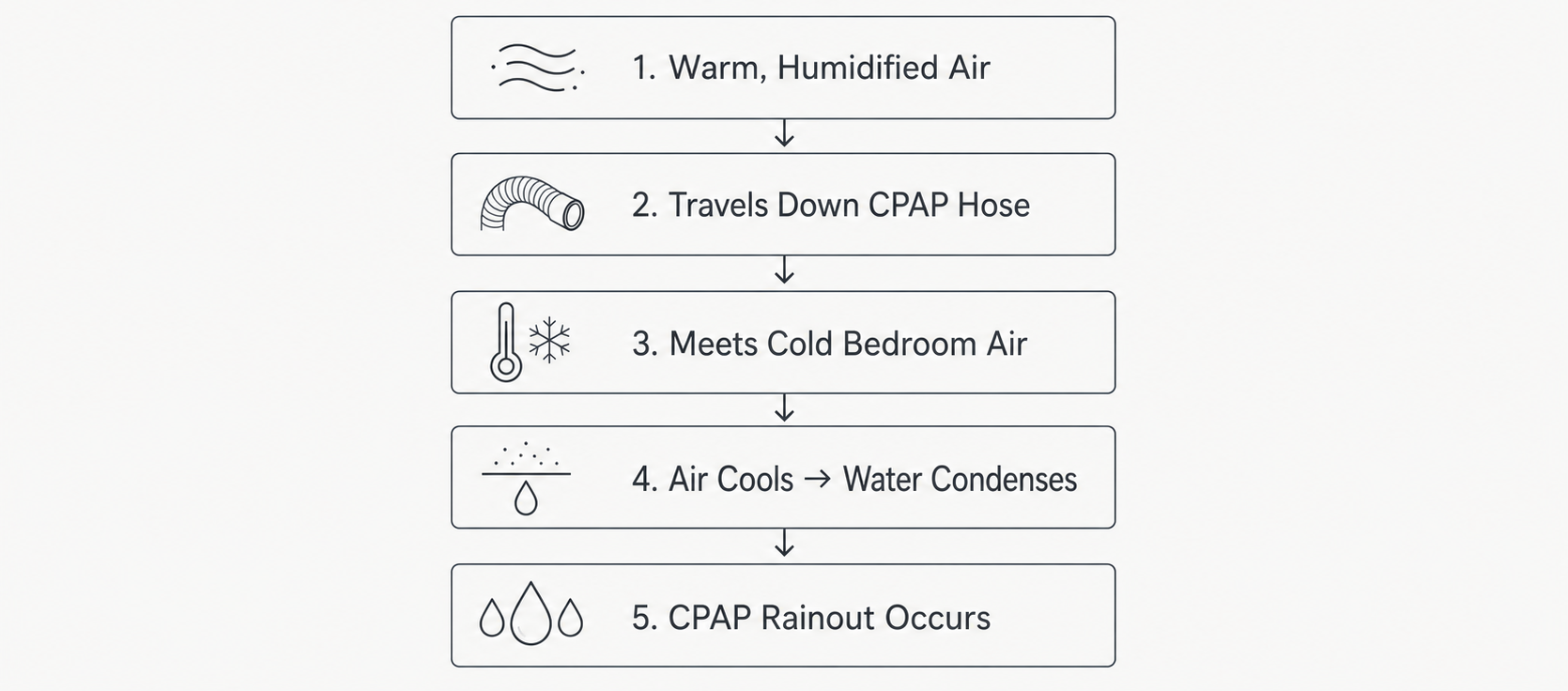
CPAP “rainout” happens when warm, humidified air cools inside your CPAP hose and condenses into liquid water droplets before reaching your mask. Waking up to gurgling sounds or a cold splash of water at 2 a.m. is frustrating and can make anyone want to give up on therapy.
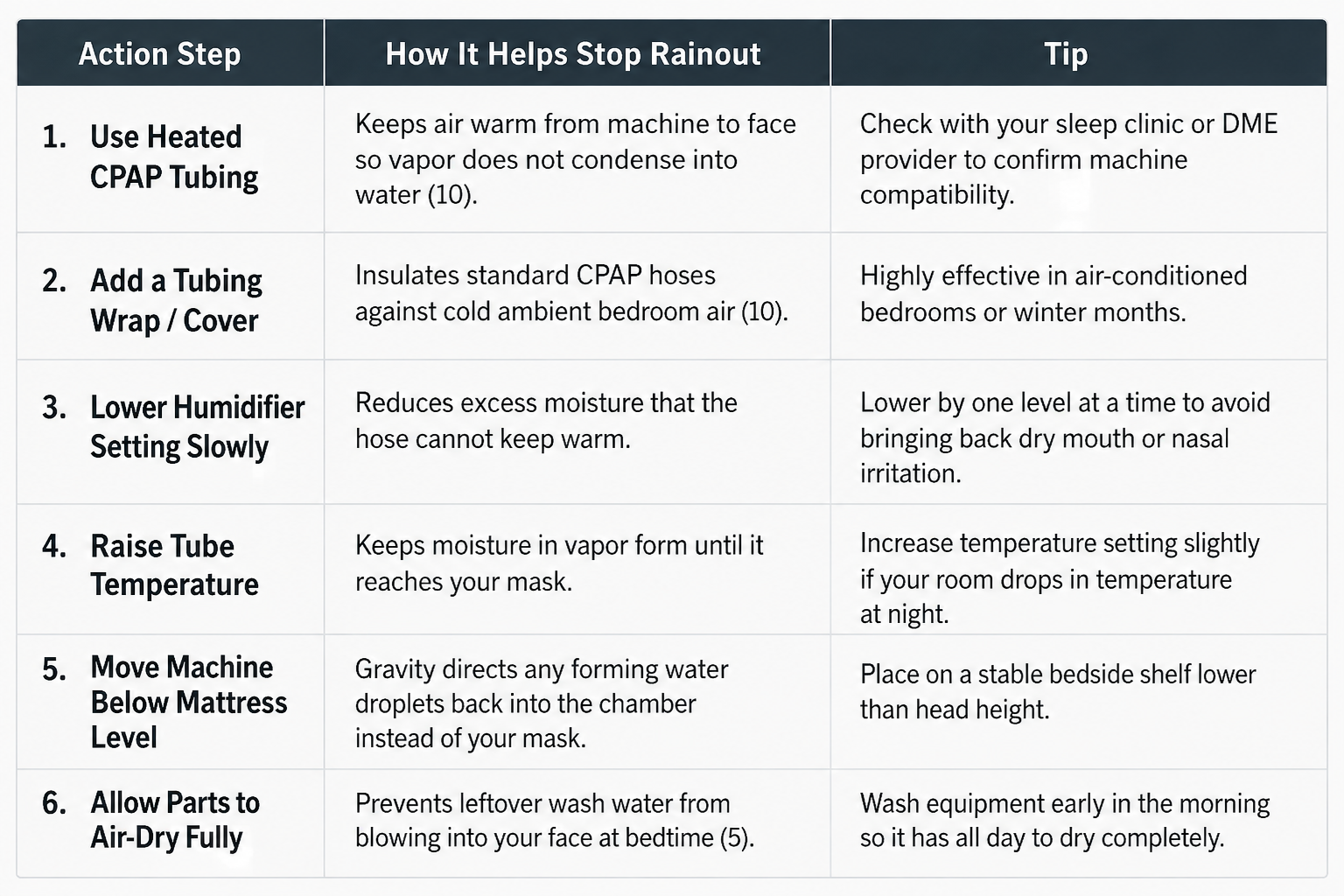
Our specialists hear this frequently, but it is a manageable issue. To fix it quickly, use a heated CPAP hose, insulate standard tubing with a cloth hose cover, raise your bedroom temperature slightly, or place your CPAP machine lower than the mattress height.
Positive Airway Pressure (PAP) therapy is the clinical standard for treating obstructive sleep apnea, helping to keep your airways open and manage symptoms like daytime sleepiness and high blood pressure (1, 2). Because consistent treatment is essential for your long-term health, resolving comfort issues like “rainout” is important. Below, we explain why this happens and how you can stop it for good.
What Is CPAP Rainout?
CPAP rainout is simply condensation inside your CPAP tubing, mask, or water chamber. It gets its nickname because the accumulating moisture forms liquid water droplets that move through the tube like rain, often popping into the mask, splashing the face, or creating a loud bubbling sound inside the hose during sleep.
It works identically to a cold glass of iced tea sweating on a humid summer afternoon, the condensation does not originate from inside the glass, but forms when moist air touches a cooler surface.
When uninvited water splashes onto your face in the middle of the night, staying consistent with therapy feels even harder.
Why Does Water Get in Your CPAP Mask or Hose?
When patients report water buildup in their tubing, we evaluate several environmental, mechanical, and maintenance factors:
- Temperature Drops in the Hose: Water usually gets in the CPAP mask or hose when warm, humidified air cools before reaching your face (3). Heated tubing keeps the air warm as it moves from the machine to the mask, while a hose cover can help insulate standard tubing in cooler rooms (3).
- Mismatched Humidity and Tube Heat: If your humidifier adds moisture but the tubing or bedroom air is too cold, condensation builds inside the hose (3). A sleep specialist or equipment provider can help balance your humidifier settings and hose temperature so the air stays comfortable without forming water droplets (3).
- Air Leaks and Poor Mask Fit: Mask leaks add significant noise, dryness, and discomfort on top of existing condensation problems (4). If your mask feels loose, wet, noisy, or leaky, your entire setup should be reviewed by a sleep specialist (4).
- Leftover Water After Cleaning: Sometimes, what appears to be rainout is simply residual wash water (5). PAP supplies should be thoroughly washed, rinsed, and allowed to air-dry completely before bedtime so leftover water is not blown through the equipment during sleep (5).
- Air Conditioning and Indoor Climate: Even in hot desert environments like Arizona, central air conditioning cools indoor bedroom air at night (6). That cooler ambient room air pulls heat from the CPAP hose, causing humidified air to condense inside the tube even when it is hot outside (6).
Is CPAP Rainout Dangerous or Just Frustrating?
CPAP rainout is generally not dangerous by itself, but it creates two major secondary problems: treatment disruption and hygiene concerns.
Treatment Disruption
Water in the tube can wake you up, trigger automatic mask removal, create a choking or splashing feeling, or make enough noise to disturb your bed partner. If you stop using your CPAP for the rest of the night, your sleep apnea goes untreated during those remaining hours.
Hygiene and Bacterial Growth
Proper care is essential when dealing with wet equipment. The U.S. Food and Drug Administration (FDA) notes that germs from your breathing passages, mouth, throat, and skin can transfer to the CPAP mask or hose during regular use (7). Additionally, dust, mold, and environmental allergens can build up inside damp CPAP components if left uncleaned (7). Wet CPAP parts must be drained, cleaned as instructed, and allowed to dry thoroughly.
Why Turning Off Your Humidifier Is Not Always the Best Fix
When patients experience rainout, their first impulse is often to turn off the humidifier completely. Our sleep team usually advises against this strategy.
Dry airflow can irritate the nose, mouth, and throat, leaving patients with nasal burning, dry mouth, morning sore throat, or nosebleeds. Clinical research shows that heated humidification reduces dry throat symptoms and significantly improves CPAP adherence in patients with upper airway symptoms (8).
Rather than eliminating moisture, the key is finding the right balance between adequate humidity and sufficient tube warmth.
Why Rainout Can Make CPAP Harder to Use
Comfort issues significantly influence whether patients stick with their treatment long-term. In a large real-world clinical study of 1,484 long-term CPAP users, mask-related side effects were reported by 75.4% of participants, with side effects directly linked to lower CPAP adherence and persistent daytime sleepiness (9).
While rainout is distinct from mask leaks, both create sleep interruptions that make therapy feel frustrating (9). Patients often assume that CPAP therapy “isn’t working for them” when the true culprit is simply an incorrect humidity setting, low hose temperature, or improper machine placement.
How Our Sleep Specialists Recommend Stopping CPAP Rainout
A step-by-step approach to eliminate rainout while preserving comfort is recommended:
What Water Should You Use in a CPAP Humidifier?
Distilled water is usually recommended for CPAP humidifiers because it lacks the mineral content found in tap water. Mineral deposits can build up inside the water chamber, compromising equipment performance and hygiene. A study on PAP care and cleaning practices highlights that distilled water is recommended for humidifiers, and water should be emptied and replaced daily (11).
If distilled water is unavailable for a single night, follow your device manufacturer’s guidelines. If tap water is used temporarily, clean the chamber thoroughly afterward and return to distilled water as soon as possible. Never add essential oils, fragrances, vapor rubs, or cleaning chemicals to the humidifier. These substances can cause severe airway irritation and damage your device.
How to Clean CPAP Equipment After Rainout?
After experiencing rainout, disconnect the hose, drain any water, rinse the mask, and allow all parts to air-dry. The FDA confirms that most CPAP masks, tubing, and water tanks can be effectively cleaned using mild soap and warm water according to manufacturer guidelines (12).
Furthermore, the FDA explicitly warns that ozone and UV light cleaning devices are not cleared or approved for CPAP sanitation (12). The agency cautions that ozone and UV light may cause safety hazards or damage internal CPAP foam and accessories (12). The safest routine remains simple: follow your machine manual, wash parts with mild soap and water, rinse thoroughly, and let them air-dry (12).
When to Seek Professional Sleep Help?
You should consult your sleep specialist if CPAP rainout continues despite equipment tweaks, causes frequent awakenings, leads to dry mouth or nasal congestion, or results in mask leaks.
Our board-certified specialists at The Insomnia and Sleep Institute of Arizona provide clinical care to patients throughout Phoenix, Scottsdale, Gilbert. We specialize in diagnosing sleep disorders, evaluating CPAP adherence, and helping you with your equipment settings so you can achieve comfortable, quiet, and uninterrupted rest.
If CPAP rainout or therapy discomfort is keeping you from getting a full night’s sleep, contact us today to schedule a consultation with our sleep team.
References
- Patil, S. P., Ayappa, I. A., Caples, S. M., Kimoff, R. J., Patel, S. R., & Harrod, C. G. (2019). Treatment of Adult Obstructive Sleep Apnea with Positive Airway Pressure: An American Academy of Sleep Medicine Clinical Practice Guideline. Journal of Clinical Sleep Medicine, 15(02), 335–343. https://doi.org/10.5664/jcsm.7640
- CPAP machines: Tips for avoiding 10 common problems. (2026). Mayo Clinic. https://www.mayoclinic.org/diseases-conditions/obstructive-sleep-apnea/in-depth/cpap/art-20044164
- Resmed. (2024, November 8). Avoid CPAP rainout. Resmed. https://www.resmed.com/en-us/sleep-health/blog/avoid-cpap-rainout/
- CPAP machines: Tips for avoiding 10 common problems. (2026). Mayo Clinic. https://www.mayoclinic.org/diseases-conditions/obstructive-sleep-apnea/in-depth/cpap/art-20044164
- American Thoracic Society. (n.d.). https://www.thoracic.org/patients/patient-resources/resources/pap-care-and-cleaning.pdf
- Central Air Conditioning. (2026, June 4). Energy.Gov. https://www.energy.gov/energysaver/central-air-conditioning
- Office. (2024). Do You Need a Device That Claims to Clean a CPAP Machine? U.S. Food and Drug Administration. https://www.fda.gov/consumers/consumer-updates/do-you-need-device-claims-clean-cpap-machine
- Soudorn, C., Muntham, D., Reutrakul, S., & Chirakalwasan, N. (2016). Effect of Heated Humidification on CPAP Therapy Adherence in Subjects With Obstructive Sleep Apnea With Nasopharyngeal Symptoms. Respiratory Care, 61(9), 1151–1159. https://doi.org/10.4187/respcare.04536
- Rotty, M.-C., Suehs, C. M., Mallet, J.-P., Martinez, C., Borel, J.-C., Rabec, C., Bertelli, F., Bourdin, A., Molinari, N., & Jaffuel, D. (2021). Mask side-effects in long-term CPAP-patients impact adherence and sleepiness: the InterfaceVent real-life study. Respiratory Research, 22(1), 17-. https://doi.org/10.1186/s12931-021-01618-x
- Resmed. (2024, November 8). Avoid CPAP rainout. Resmed. https://www.resmed.com/en-us/sleep-health/blog/avoid-cpap-rainout/
- Willis, L. D., Spray, B. J., Edmondson, E., Pruss, K., & Jambhekar, S. (2022). Positive Airway Pressure Device Care and Cleaning Practices in the Pediatric Home. Respiratory Care, 68(1), 87–91. https://doi.org/10.4187/respcare.10241
- Office. (2024). Do You Need a Device That Claims to Clean a CPAP Machine? U.S. Food and Drug Administration. https://www.fda.gov/consumers/consumer-updates/do-you-need-device-claims-clean-cpap-machine
Disclaimer: The information provided in this blog post is for educational and informational purposes only and is not intended as a substitute for professional medical advice, diagnosis, or treatment. Always consult with a licensed healthcare provider for recommendations specific to your individual health needs.