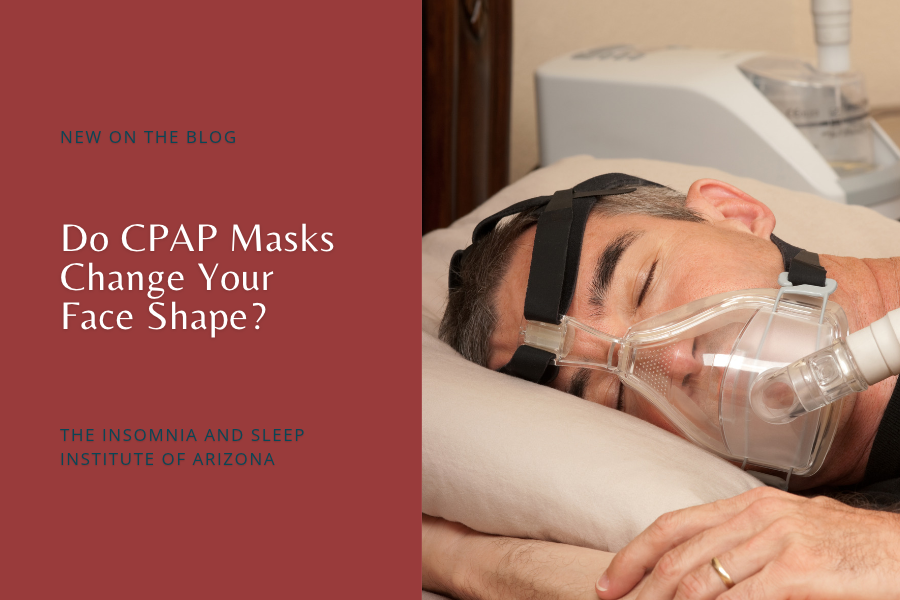
CPAP therapy has not been shown to cause noticeable changes to your facial bone structure as an adult, though small shifts in jaw and tooth position have been measured after two or more years of nasal CPAP (4). While it is common to notice temporary morning red marks, minor strap indentations, or soft tissue compression, these reflect the skin and soft tissue, not the bone. In fact, consistent CPAP use often improves overall facial appearance by eliminating sleep-deprivation puffiness, fluid retention, and skin redness.
Here is what happens to your facial tissue overnight, how sleep therapy influences your appearance, and how our team helps patients prevent mask discomfort.
Adult Bone Stability vs. Pediatric Growth
The nasal bridge is a primary pressure point because it is a bony prominence with reduced tissue perfusion, making it susceptible to skin irritation (1). Manufacturers like Philips acknowledge that mask area irritation often indicates excessive strap tightness (2), while ResMed designs modern cushions specifically to reduce pressure on the bridge of the nose (3).
In adults, facial bones change far less than in children, but they are not completely fixed. In one study of 46 adults, X-rays taken after at least two years of nasal CPAP showed small shifts in the upper jaw, chin, and upper front teeth, although none of the patients reported a permanent change in their bite or facial profile (4).
In pediatric sleep medicine, the clinical approach is different. Because children have growing facial bones, long-term mask pressure can influence midface development and maxillary growth (5). In our practice, our pediatric sleep specialists monitor mask fit in children with high precision to support natural facial development (5).
Temporary Soft Tissue Compression vs. Restored Vitality
Instead of bone movement, what patients actually experience is temporary soft tissue compression. Magnetic resonance imaging (MRI) demonstrates that wearing a CPAP mask creates measurable, temporary surface deformation around the nose and upper lip while the device is on (6). Once you remove the mask in the morning, tissue perfusion restores and these indentations fade (6).
Beyond temporary morning lines, consistent CPAP therapy actually enhances facial appearance. When obstructive sleep apnea goes untreated, the face may show more puffiness and more redness under the eyes and over the cheeks. Clinical research shows that independent observers rate post-treatment patient faces as looking significantly more alert, youthful, and attractive after starting CPAP (7).
In a small study of 20 adults, objective measurements taken after at least two months of adherent CPAP use showed (7):
- Reduced facial redness around the cheeks and eyes (7).
- Decreased forehead surface volume, which may reflect changes in overnight fluid shifts (7).
- No change in the width of the eye opening (7).
How We Help Patients Prevent Mask Marks and Skin Irritation
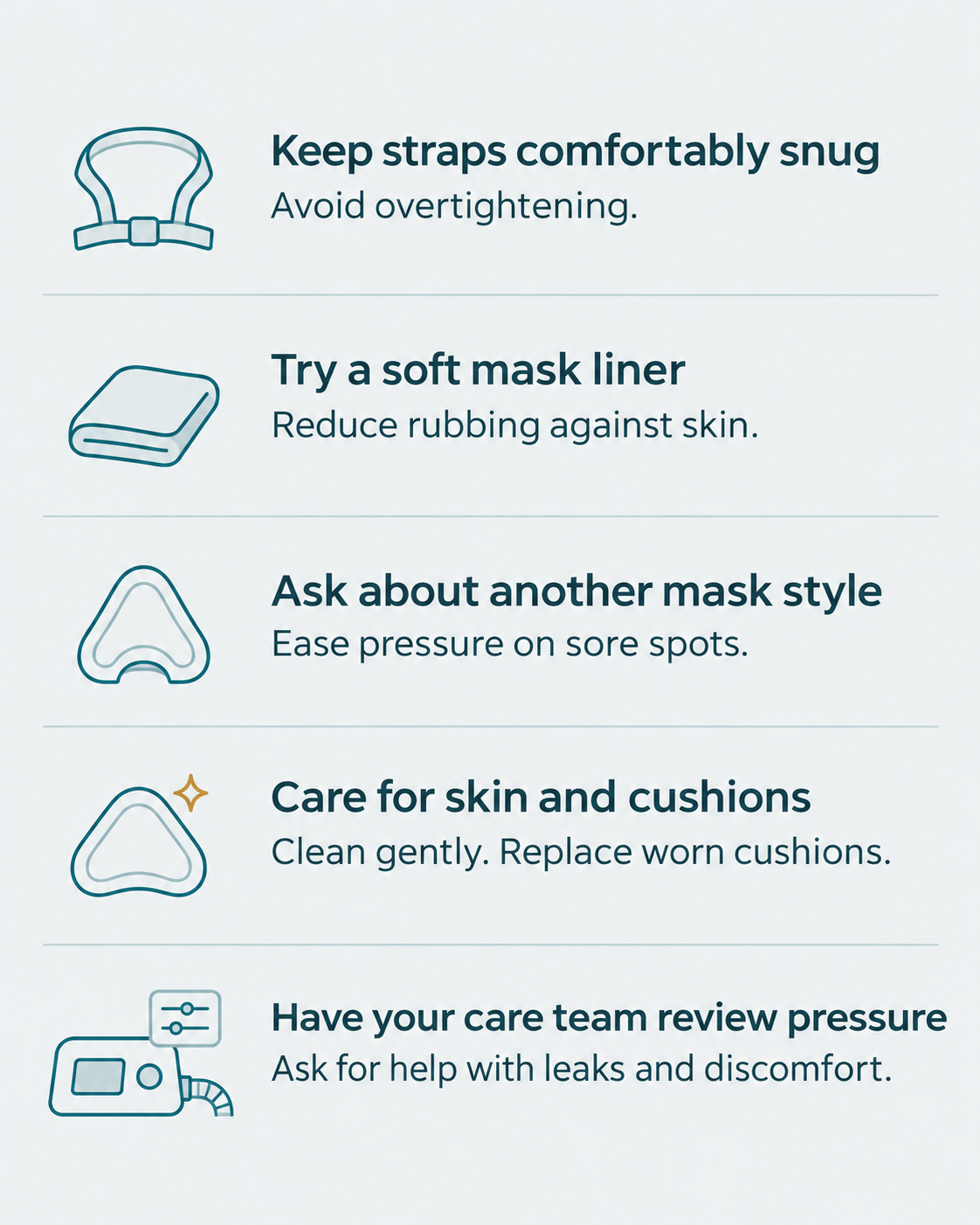
Physical discomfort and mask marks are key factors affecting how consistently patients stay on therapy (8, 9). You should not have to tolerate skin irritation to treat your sleep apnea. In our clinic, we use five practical tips to eliminate pressure points:
- Avoid Over-Tightening Straps: Pulling headgear too tight collapses the soft silicone cushion, which increases air leaks and pushes hard plastic into your skin (9, 10). A proper fit should feel secure without leaving deep grooves (9, 10).
- Use Soft Fabric Liners: Placing a breathable mask liner between the silicone cushion and your skin reduces friction, absorbs sweat, and prevents pressure marks (11).
- Rotate Mask Cushions: Different mask styles distribute pressure across different areas of the face (11). Transitioning from a full-face mask to a sub-nasal cushion or nasal pillows alleviates constant pressure on the nasal bridge (11).
- Protect Skin Barrier and Equipment: Worn cushions lose their structural integrity over time, causing users to overtighten straps to stop leaks (12, 13, 14). Replacing worn silicone cushions and maintaining clean skin prevents redness and irritation (13, 14).
- Optimize Pressure Settings: If machine pressure settings are incorrect, excessive airflow breaks the mask seal, prompting users to over-tighten headgear (12, 14). Our sleep physicians routinely evaluate therapy data to balance comfort and airway support (14).
CPAP Therapy in Pop Culture
CPAP has appeared in popular culture for years. The Sopranos showed Uncle Junior being treated for obstructive sleep apnea, Modern Family featured Cam using breathing equipment for sleep apnea, and The Simpsons referenced Homer stopping breathing during sleep and using a doctor-prescribed breathing machine.
Public figures have also helped make sleep apnea treatment more familiar. Rosie O’Donnell has openly discussed her sleep apnea diagnosis and CPAP use, while William Shatner has spoken about living with sleep apnea and supported awareness efforts. These conversations can make CPAP feel less unfamiliar, even as users still have questions about mask marks, skin irritation, and long-term mask pressure.
Get Expert CPAP Support at The Insomnia and Sleep Institute of Arizona
CPAP works better with the right support. Many people struggle with CPAP in the beginning. The common issues are familiar, mask discomfort, pressure that feels off, even concerns about facial marks.
These problems have solutions. The difference comes from how the therapy is adjusted.
The Insomnia and Sleep Institute of Arizona evaluates mask fit, pressure settings, and sleep study data to improve comfort and consistency. Small changes often lead to better use over time.
Serving patients across Phoenix, Scottsdale, and Gilbert.
Trying to fix everything alone can drag the process out. Guidance from a sleep specialist makes the adjustment period shorter and easier to manage. Contact us.
References
- Brill, A.-K., Pickersgill, R., Moghal, M., Morrell, M. J., & Simonds, A. K. (2018). Mask pressure effects on the nasal bridge during short-term noninvasive ventilation. ERJ Open Research, 4(2), 00168-2017. https://doi.org/10.1183/23120541.00168-2017
- Sleep apnea. (n.d.). Retrieved March 24, 2026, from https://www.philips.com/c-dam/b2bhc/master/landing-pages/experience-catalog/sleep/sleep-solutions-for-your-veterans/philips-respironics-va-a-veterans-guide-to-sleep-therapy.pdf
- AirFit N30i nasal freedom mask | Resmed UK. (2025, December 18). Resmed UK. https://www.resmed.co.uk/products/masks/nasal-masks/airfit-n30i/
- Tsuda, H., Almeida, F. R., Tsuda, T., Moritsuchi, Y., & Lowe, A. A. (2010). Craniofacial Changes After 2 Years of Nasal Continuous Positive Airway Pressure Use in Patients With Obstructive Sleep Apnea. Chest, 138(4), 870–874. https://doi.org/10.1378/chest.10-0678
- Roberts, S. D., Kapadia, H., Greenlee, G., & Chen, M. L. (2016). Midfacial and Dental Changes Associated with Nasal Positive Airway Pressure in Children with Obstructive Sleep Apnea and Craniofacial Conditions. Journal of Clinical Sleep Medicine, 12(4), 469–475. https://doi.org/10.5664/jcsm.5668
- Sims, A., Simmons, A., Hoffman, M., & Schindhelm, K. (2016). Facial deformations during nasal continuous positive airway pressure therapy. Journal of Biomechanics, 49(16), 3848–3854. https://doi.org/10.1016/j.jbiomech.2016.10.027
- Chervin, R. D., Ruzicka, D. L., Vahabzadeh, A., Burns, M. C., Burns, J. W., & Buchman, S. R. (2013). The Face of Sleepiness: Improvement in Appearance after Treatment of Sleep Apnea. Journal of Clinical Sleep Medicine, 9(9), 845–852. https://doi.org/10.5664/jcsm.2976
- Shokoufeh Aalaei, PhD, Fariborz Rezaeitalab, MD, Hamed Tabesh, PhD, Amini, M., Lahya Afsharisaleh, MD, Sayyed, Hadi Asadpour, MD, & Eslami, S. (2020). Factors Affecting Patients’ Adherence to Continuous Positive Airway Pressure Therapy for Obstructive Sleep Apnea Disorder: A Multi-Method Approach. Iranian Journal of Medical Sciences, 45(3), 170. https://doi.org/10.30476/ijms.2019.45785
- Qiao, M., Xie, Y., Wolff, A., & Kwon, J. (2023). Long term adherence to continuous positive Airway pressure in mild obstructive sleep apnea. BMC Pulmonary Medicine, 23(1). https://doi.org/10.1186/s12890-023-02612-3
- Rotty, M.-C., Suehs, C. M., Mallet, J.-P., Martinez, C., Borel, J.-C., Rabec, C., Bertelli, F., Bourdin, A., Molinari, N., & Jaffuel, D. (2021). Mask side-effects in long-term CPAP-patients impact adherence and sleepiness: the InterfaceVent real-life study. Respiratory Research, 22(1). https://doi.org/10.1186/s12931-021-01618-x
- Rowland, S., Aiyappan, V., Hennessy, C., Catcheside, P., Chai-Coezter, C. L., McEvoy, R. D., & Antic, N. A. (2018). Comparing the Efficacy, Mask Leak, Patient Adherence, and Patient Preference of Three Different CPAP Interfaces to Treat Moderate-Severe Obstructive Sleep Apnea. Journal of Clinical Sleep Medicine, 14(1), 101–108. https://doi.org/10.5664/jcsm.6892
- Rotty, M.-C., Suehs, C. M., Mallet, J.-P., Martinez, C., Borel, J.-C., Rabec, C., Bertelli, F., Bourdin, A., Molinari, N., & Jaffuel, D. (2021). Mask side-effects in long-term CPAP-patients impact adherence and sleepiness: the InterfaceVent real-life study. Respiratory Research, 22(1). https://doi.org/10.1186/s12931-021-01618-x
- Pogach, M. (2020, July 29). I can’t tolerate CPAP, what can I do? – Harvard Health. Harvard Health. https://www.health.harvard.edu/blog/i-cant-tolerate-cpap-what-can-i-do-2020072920672
- Wang, W.-X., Chuang, Y.-N., Chang, C.-N., Yang, M.-C., & Shen, E. P. (2025). Impact of Positive Airway Pressure and Mask Leakage on Dry Eye and Glaucoma Risk in Obstructive Sleep Apnea: A Cross-Sectional Analysis. Biomedicines, 13(12), 3077. https://doi.org/10.3390/biomedicines13123077
Disclaimer: The information provided in this blog post is for educational and informational purposes only and is not intended as a substitute for professional medical advice, diagnosis, or treatment. Always consult with a licensed healthcare provider for recommendations specific to your individual health needs.